
Table of Contents
Nigeria’s Diplomatic and Sporting Embarrassment: A Call for Structural Reform
The Paris Incident: A Symbol of Systemic Failure
On August 8, 2024, at the Velodrome de Saint-Quentin-en-Yvelines near Paris, a striking episode unfolded that encapsulated Nigeria’s broader institutional shortcomings. Ese Ukpeseraye, a qualified Nigerian cyclist for the Keirin and Sprint events, found herself stranded on the track without a bicycle. This was not due to lost luggage or logistical mishaps during transit; rather, the Nigerian sports authorities had failed to provide a specialized track bike essential for competition.
In a moment broadcast worldwide, it was not Nigerian officials who resolved the crisis but the German Cycling Federation (Bund Deutscher Radfahrer), which generously lent Ukpeseraye a bike. Despite representing a nation of over 220 million people and boasting a rebased GDP of $477 billion, Nigeria’s presence at the event was reduced to dependence on foreign goodwill. This incident is emblematic of a diplomatic and administrative culture that prioritizes appearances over preparedness, a pattern persisting for more than six decades.
The Culture of Diplomatic Excess and Its Consequences
When Nigerian delegations arrive in global capitals such as Brussels, Washington, or Beijing, a particular silence often descends-a silence born of weary tolerance. It is akin to hosting a boisterous guest who forgets their wallet yet expects the best accommodations. The debacle in Paris was not an isolated oversight but a symptom of a diplomatic system driven by the “estacode” economy-where officials exploit per diem allowances from international travel as a lucrative source of personal gain.
Data from recent international events underscores this dysfunction. At the COP28 Climate Summit in Dubai in December 2023, Nigeria registered a delegation of 1,411 individuals, tying with China for the third-largest contingent globally. This was despite Lagos grappling with inflation nearing 29% and widespread fuel shortages. Nigeria’s delegation outnumbered those of the United States and the United Kingdom combined, yet lacked the technical expertise and strategic focus that characterized China’s team, which concentrated on securing photovoltaic supply chains and critical mineral agreements.
Similarly, at the 78th UN General Assembly in New York in September 2023, Nigeria’s delegation was so bloated with non-essential personnel that many officials lacked accreditation to enter the UN headquarters, causing logistical chaos in Manhattan hotels. In response, President Bola Tinubu mandated a 60% reduction in travel entourages in January 2024. However, without systemic reforms, such directives risk being mere lip service, as the “estacode economy” continues to drain resources and tarnish Nigeria’s international reputation.
Economic Contradictions and Governance Failures
Nigeria’s fiscal reality reveals a stark paradox. The country depends heavily on its diaspora, which remits over $20 billion annually-an unofficial lifeline stabilizing the economy and supporting millions of households. Yet, simultaneously, public funds are squandered on extravagant travel allowances and bloated delegations, often with little transparency or accountability. Official estacode expenditures are reported in the millions, but the true cost likely runs into billions of dollars, reflecting deep institutional rot.
This wastefulness is not only an economic misstep but a moral failure. While citizens endure austerity and economic hardship, the public sector resists modernization efforts, neglects audits of travel expenses, and fails to justify the outcomes of frequent foreign trips. The disconnect between the sacrifices demanded of ordinary Nigerians and the profligacy of officials abroad undermines trust in governance and hampers national progress.
Reimagining Nigerian Diplomacy: From Patronage to Performance
To reverse this trajectory, Nigeria must abandon superficial emulation of Western diplomatic norms and embrace a model rooted in self-reliance and accountability. Instead of producing yet another “Vision 2050” filled with empty jargon, the country needs pragmatic, immediate reforms that transform diplomacy into a results-driven commercial enterprise.
Implementing a Rigorous Travel Approval System
First, the approval process for international travel must be depoliticized and standardized through a “Business Case” gatekeeper mechanism. No official-from ministers to special assistants-should travel abroad without submitting a Pre-Departure Memorandum (PDM) that clearly outlines:
- Confirmed meetings and engagements (not merely requested ones);
- Expected Return on Engagement (ROE), quantified in monetary terms or formal agreements such as Memoranda of Understanding (MoUs);
- The minimal team size necessary to achieve objectives.
If a delegation cannot demonstrate that its activities will generate value exceeding the costs of travel and allowances, the Ministry of Foreign Affairs must have the authority to veto the trip.
Transforming Embassies into Dynamic Trade Hubs
Second, Nigerian embassies must shed their reputation as sinecures for political loyalists and become proactive trade and investment outposts. By the third quarter of 2025, every mission should produce quarterly performance reports tracking:
- Volumes of non-oil trade facilitated;
- Conversion of Foreign Direct Investment (FDI) leads into site visits and concrete projects;
- Mobilization of diaspora remittances into productive investment channels.
Funding for embassies should be contingent on meeting these targets. Missions that fail to deliver for two consecutive quarters should face budget cuts. Officials responsible for logistical failures-such as the Paris bicycle incident-should face dismissal rather than mere reassignment.
Establishing a Sovereign Mission Management Council
Third, to address coordination gaps between the Ministry of Sports, Ministry of Foreign Affairs, and the Presidency, Nigeria should create a temporary Sovereign Mission Management Council (SMMC) housed within the Presidency. This body would oversee preparations for major international events-such as the Olympics, UN General Assembly, and World Economic Forum-ensuring readiness months in advance. The SMMC would verify that essential equipment is procured, accommodations are booked exclusively for critical personnel, and technical documentation is completed, thereby eliminating last-minute crises.
Conclusion: From Potential to Performance
Global perception is shaped not by potential but by tangible results. Each time a Nigerian athlete borrows a foreign bike or a delegation overwhelms hotel lobbies with unnecessary aides, the nation pays a price-increased borrowing costs, diminished diplomatic credibility, and lost economic opportunities.
For over six decades, Nigeria has proclaimed itself the “Giant of Africa,” a claim supported by its population and economic size. Yet, as long as it depends on others for basic operational tools and event logistics, the world will view it as a giant unwilling to mature. The time has come to fill Nigeria’s global seat with competence, discipline, and strategic vision-or risk losing its place on the international stage.
About the Author
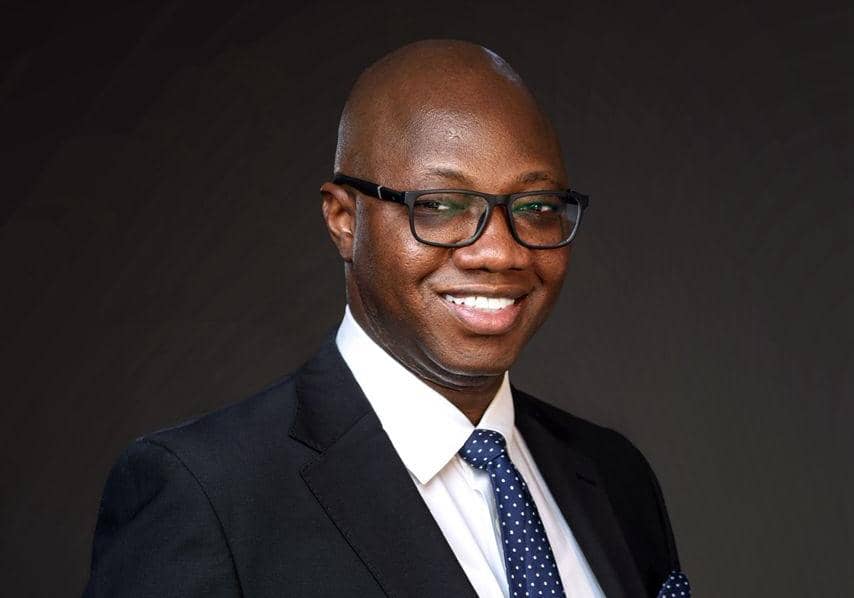
Amofin Beulah Adeoye is a distinguished legal and financial expert renowned for his expertise in forensic accounting, governance, and philanthropy. A First Class Law graduate from the University of Ibadan, he holds certifications as a Certified Fraud Examiner (CFE) and Associate Chartered Accountant (ACA). Adeoye formerly led forensic services as a Financial Advisory Partner at Deloitte & Touche West Africa before stepping down in August 2024 to focus on political and community development initiatives in Nigeria. He is widely recognized for his contributions, receiving accolades both locally and internationally. Adeoye maintains professional ties with multinational corporations across Europe, Asia, the United States, and Africa, spanning sectors such as healthcare, financial services, energy, logistics, and real estate. Actively engaged with the Nigerian diaspora, he facilitates strategic dialogues worldwide and spearheads philanthropic projects through the Beulah Adeoye Foundation.
