
Table of Contents
Ethiopia Initiates Nationwide Hepatitis B Birth Dose Vaccination to Protect Newborns
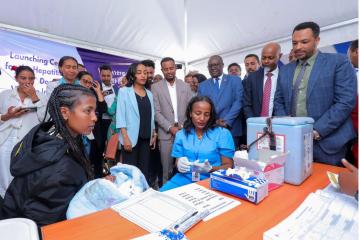
Addis Ababa, Ethiopia – November 25, 2025 – In a landmark public health advancement, Ethiopia has officially commenced the nationwide administration of the Hepatitis B Birth Dose (HepB BD) vaccine. This critical intervention aims to curb the vertical transmission of Hepatitis B virus (HBV) from mothers to their newborns, significantly reducing the risk of chronic infection. The rollout is supported by a coalition of global health partners, including the World Health Organization (WHO), Gavi, the Vaccine Alliance, UNICEF, and other immunization stakeholders.
Addressing a Persistent Public Health Threat
Hepatitis B continues to pose a major health burden in Ethiopia, with mother-to-child transmission accounting for a substantial proportion of chronic HBV cases. Research indicates that nearly 90% of infants infected at birth develop lifelong complications such as liver cirrhosis and hepatocellular carcinoma. Administering the HepB BD vaccine within the first 24 hours after birth is internationally recognized as the most effective preventive measure against these outcomes. Countries that have integrated this vaccine into their immunization schedules have witnessed dramatic reductions in pediatric HBV infections, underscoring its vital role in global elimination efforts.
Scope and Ambitions of the National Rollout
The program targets Ethiopia’s annual birth cohort of approximately 3.8 million infants, with an initial objective to achieve at least 80% coverage nationwide. This ambitious goal reflects the government’s commitment to safeguarding the health of its youngest citizens and advancing toward the WHO’s 2030 hepatitis elimination targets.
Capacity Building and Preparatory Measures
In preparation for the launch, a comprehensive Training of Trainers (ToT) workshop was held in Adama from August 26-27, 2025, funded by WHO. Over 100 professionals from the Expanded Programme on Immunization (EPI) and Maternal and Child Health (MCH) sectors were equipped with the knowledge and skills necessary to spearhead the vaccine introduction across Ethiopia’s diverse regions. Following this, the Ministry of Health coordinated cascade trainings at regional and district levels, with technical assistance from WHO, UNICEF, and partners to ensure efficient vaccine distribution, cold chain integrity, accurate data collection, and overall service readiness.
Collaborative Efforts and Pilot Programs Informing National Strategy
Key immunization partners, including WHO, UNICEF, and Gavi, have played an instrumental role in supporting the Ministry of Health. Their collaboration involved prioritizing the HepB BD vaccine within Ethiopia’s immunization framework, developing evidence-based guidelines, and conducting pilot projects in select districts across three regions. These pilots were crucial in identifying operational challenges and refining strategies for a scalable and sustainable national rollout.
Standardization and Funding Support
The Ministry of Health also led the creation of standardized protocols and training materials to ensure uniform service delivery nationwide. Additionally, technical expertise was provided to support Ethiopia’s vaccine funding proposals submitted to Gavi, facilitating financial sustainability for the program.
High Readiness and Government Commitment
The recent National Readiness Assessment Tool (RAT) evaluation yielded an impressive 97% score, reflecting Ethiopia’s preparedness and dedication to the successful implementation of the HepB BD vaccine.
Voices from Leadership and Partners
Dr. Dereje Duguma, State Minister of Health, highlighted the urgency of this initiative: “Hepatitis B is particularly dangerous because up to 90% of infants infected at birth may develop chronic disease. The birth dose vaccine is a critical shield against this threat. With its introduction, Ethiopia now offers 15 routine vaccines to protect children.” He further emphasized the vaccine’s safety and quality assurance, urging communities and parents to ensure every newborn receives this life-saving dose.
Dr. Francis Chisaka Kasolo, WHO Representative to Ethiopia, remarked, “The launch of the Hepatitis B birth dose vaccine is a pivotal moment in our fight to eliminate mother-to-child transmission of HBV. WHO is honored to support Ethiopia in protecting newborns from a preventable disease and fostering healthier futures.”
Emmanuella Baguma, Senior Country Manager for Ethiopia at Gavi, stated, “Introducing the HepB BD vaccine into Ethiopia’s routine immunization schedule is transformative for child health. This intervention will shield thousands of newborns during their most vulnerable days. Gavi proudly supports Ethiopia’s leadership in enhancing immunization systems and promoting equitable health access for all children.”
UNICEF Representative Dr. Aboubacar Kampo added, “Every child deserves a healthy start. Administering the Hepatitis B birth dose within 24 hours is one of the most effective ways to prevent chronic infection and its severe consequences. UNICEF is committed to partnering with Ethiopia to ensure this vaccine reaches every newborn.”
Ongoing Support and Future Evaluations
WHO, UNICEF, and Gavi will continue to provide technical and financial assistance throughout the vaccine rollout. This includes support for the official launch, continuous supervision, and a Post Introduction Evaluation (PIE) to monitor progress, identify challenges, and optimize implementation.
Significance for Ethiopia’s Public Health Landscape
This initiative represents a monumental stride in Ethiopia’s efforts to eliminate Hepatitis B transmission and protect future generations from preventable liver disease. By integrating the HepB BD vaccine into routine immunization, Ethiopia aligns with global health goals and demonstrates a strong commitment to child health and disease prevention.
About Gavi, the Vaccine Alliance
Gavi, the Vaccine Alliance, is a global public-private partnership dedicated to immunizing over half of the world’s children against deadly diseases. It unites developing countries, donor governments, WHO, UNICEF, the World Bank, vaccine manufacturers, technical agencies, civil society, the Bill & Melinda Gates Foundation, and other private sector partners. Since its establishment in 2000, Gavi has helped vaccinate more than 1.2 billion children and prevented over 20.6 million deaths, significantly reducing child mortality in 78 low-income countries.
Gavi also enhances global health security by supporting health systems and funding vaccine stockpiles for diseases such as Ebola, cholera, meningitis, and yellow fever. Currently, Gavi focuses on reaching zero-dose children-those who have never received any vaccine-using innovative technologies like drones and biometric systems to improve vaccine delivery and outbreak prevention. Learn more at www.gavi.org and follow Gavi on Bluesky, Facebook, Instagram, LinkedIn, TikTok, X, and YouTube.
