
Table of Contents
Transforming Health Education in Africa: Launch of Competency-Based Curricula
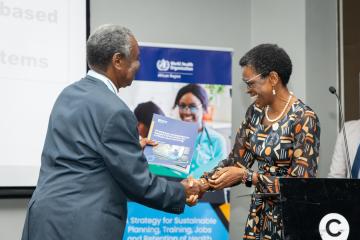
Pretoria, South Africa- In a landmark initiative, the World Health Organization (WHO) Regional Office for Africa has unveiled the continent’s inaugural Prototype Competency-Based Curricula tailored for ten critical health professions. This groundbreaking development represents a pivotal shift in how African nations prepare their healthcare workforce to meet contemporary challenges and future demands.
From Theory to Practice: A New Paradigm in Health Training
The official launch event took place in Pretoria, complemented by simultaneous activities across several African countries. This initiative marks a decisive move away from traditional, lecture-heavy education models toward competency-driven training. The new approach ensures that graduates are equipped from day one to provide safe, effective, and patient-centered healthcare services.
Collaborative Development Rooted in Global Standards
Building on the Global Competency and Outcomes Framework for Universal Health Coverage (2022), the curricula were meticulously crafted through a collaborative effort involving over 300 stakeholders. This diverse group included academic institutions, professional regulatory bodies, government ministries, students, and development partners. Oversight was provided by the Curriculum Development Advisory Group, featuring leading African experts in health education and clinical practice.
Setting a Continental Benchmark for Health Professions
These prototype curricula establish a unified standard for quality and relevance across the continent. They offer a foundational template for countries to modernize their national training programs for essential health roles such as nurses, midwives, pharmacists, dentists, and laboratory scientists, among others.
Addressing Africa’s Health Workforce Challenges
Despite a significant increase in Africa’s health workforce-from 1.6 million in 2013 to over 5 million in 2022-the continent is projected to face a shortfall of approximately 6.1 million health workers by 2030. Compounding this issue, nearly 27% of trained health professionals remain unemployed, highlighting a misalignment between existing education systems and labor market requirements.
“Historically, training has focused on obtaining qualifications rather than developing true competence. Competence is the cornerstone of saving lives,” emphasized Dr. Adelheid Onyango, Director of Health Systems and Services at WHO Africa. “These curricula are designed to cultivate health workers who are not only skilled and ethical but also confident and community-focused.”
Core Competencies for Future-Ready Health Workers
The curricula prioritize hands-on clinical skills, ethical decision-making, emergency response, and primary care proficiency. They also emphasize adaptability to emerging technologies such as artificial intelligence and digital health tools, ensuring graduates can deliver high-quality care across diverse healthcare environments.
Enhancing Workforce Mobility and Integration
A key objective is to harmonize competencies across African countries, facilitating easier workforce mobility, reducing the need for repetitive certification processes, and fostering a more cohesive continental health labor market.
Aligning with the Africa Health Workforce Agenda 2026-2035
The curriculum launch coincides with the Member States Consultation on the Africa Health Workforce Agenda 2026-2035, a strategic forum where policymakers, regulators, and experts are shaping plans to expand employment opportunities, reform health education, and improve workforce retention. The new competency-based curricula are poised to be instrumental in accelerating these reforms.
Next Steps: Customization, Accreditation, and Quality Assurance
WHO encourages countries, academic institutions, regulatory bodies, and professional associations to tailor the prototype curricula to their specific national contexts. Future efforts will focus on supporting implementation, establishing continental accreditation standards, enhancing regulatory frameworks to maintain training quality, promoting mutual recognition of qualifications, and advancing toward a unified African health labor market.
A Vision for a Continental Movement in Health Workforce Excellence
“This initiative is just the beginning of a continent-wide transformation,” Dr. Onyango stated. “These curricula will serve as the foundation for a new era characterized by quality, trust, and excellence in Africa’s health workforce.”
