
Table of Contents
Will We Experience a White Christmas This Year?
Image source, Getty Images
BySarah Keith-Lucas
Lead Weather Presenter
As the evenings grow longer and festive decorations begin to sparkle, many of us start to wonder if this year will bring the magic of snow on Christmas Day.
Iconic holiday imagery often features landscapes draped in snow, yet in much of the UK, such scenes are infrequent. Surprisingly, a white Christmas occurs more often than many realize.
Historical data reveals that over 50% of Christmas Days in the UK have experienced snowfall somewhere across the country.
Despite these encouraging odds, the precise forecast for this year’s festive period remains uncertain and will only become clearer closer to the date.
So, what insights can we gather at this stage about the likelihood of a snowy Christmas this year?
Understanding What Constitutes a ‘White Christmas’
Officially, a ‘white Christmas’ does not require a thick, pristine blanket of snow covering the ground. Instead, the Met Office defines it as the observation of at least one snowflake falling anywhere within its network of approximately 300 weather stations during the 24 hours of December 25th.
This definition has evolved over time to incorporate data from both automated and manual weather stations, broadening the scope of snowfall detection.
It’s important to note that snow already lying on the ground on Christmas Day, while visually festive, does not qualify under the official criteria unless fresh snow is recorded falling.
When Can We Expect a Definitive White Christmas Forecast?
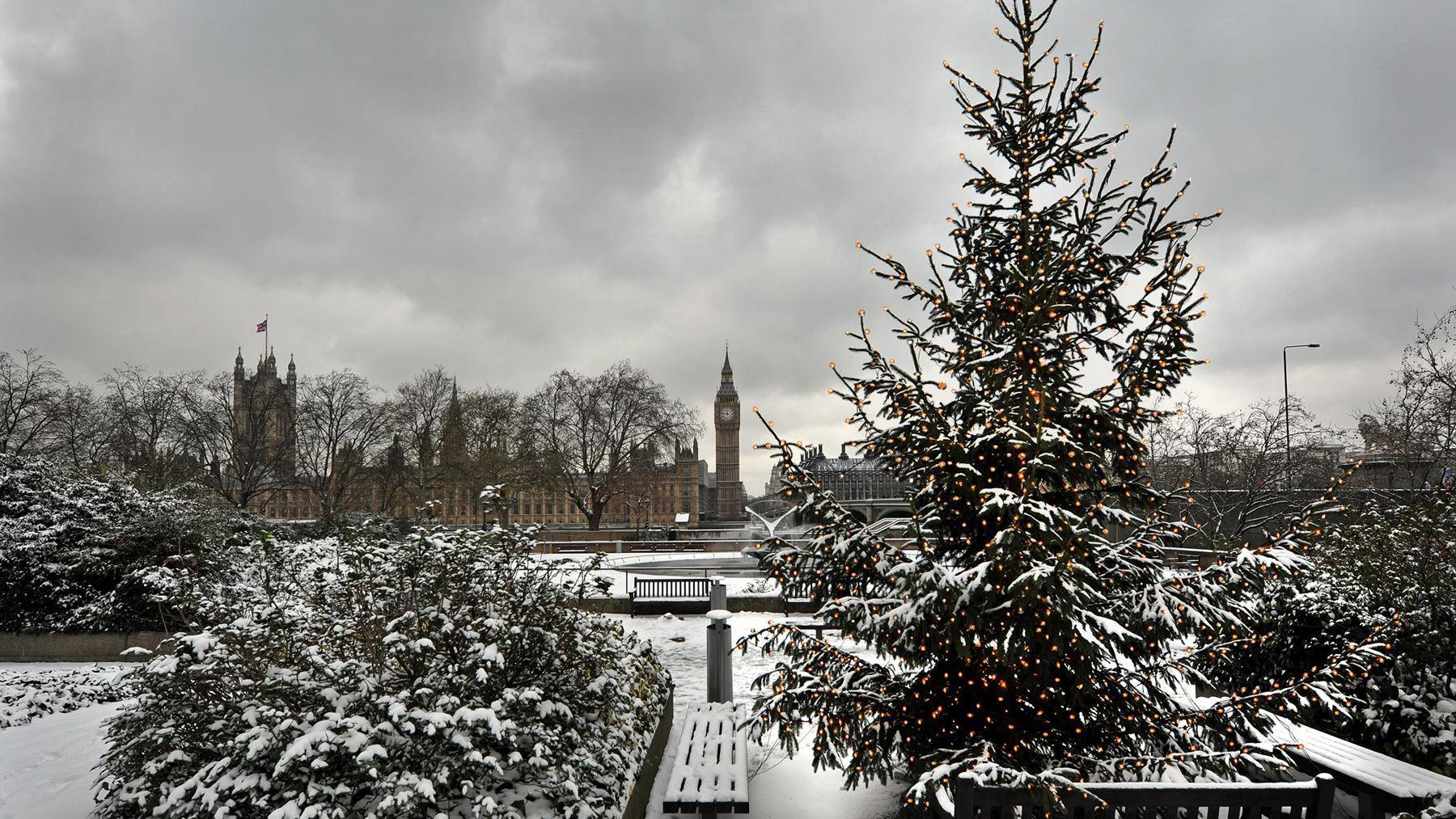
December 2010 brought exceptionally low temperatures and widespread snow, with many areas reporting snow-covered ground on Christmas Day.
At present, it remains premature to confirm whether snow will grace this Christmas. The most reliable forecasts typically emerge about five days before December 25th. For the latest updates, monitoring trusted sources such as the BBC Weather app or website is advisable.
Additionally, monthly outlooks provide valuable insights into longer-term weather trends.
Predicting snowfall in the UK is notoriously challenging due to its island geography and the dominant influence of temperate Atlantic air masses.
Nevertheless, advanced long-range forecasting models are beginning to identify potential patterns for the holiday season, influenced by global atmospheric phenomena known as teleconnections. These large-scale interactions link weather systems across vast distances, shaping local conditions.
One such factor is a persistent warm anomaly in the Pacific Ocean, which may encourage the development of high-pressure systems over Europe, potentially ushering in colder weather.
Meteorologists are also monitoring the possible emergence of La Niña, the cooler phase of the El Niño Southern Oscillation (ENSO) cycle, which can impact weather worldwide.
While the relationship between La Niña and UK weather is complex, historical data suggests it often leads to high-pressure dominance over the Atlantic during early winter, increasing the likelihood of colder conditions in December.
Current computer models generally indicate a trend toward more settled and chillier weather as Christmas approaches, raising hopes for a festive dusting of snow.
Recalling the Most Recent White Christmas in the UK
The last notable widespread white Christmas occurred in 2010, when snow was recorded falling at 19% of weather stations, and an extraordinary 83% of stations reported snow lying on the ground.
Since 2020, every Christmas except 2024 has officially qualified as white under the Met Office’s criteria, although in most of these years, snow accumulation on the ground was minimal and localized.
Assessing the Probability of a White Christmas Across the UK
The likelihood of experiencing snow on Christmas Day varies significantly by region, with northern and elevated areas enjoying the highest chances.
Regions such as northern and eastern Scotland, northern England, north Wales, and the north-west Midlands are traditionally the most probable locations for a white Christmas.
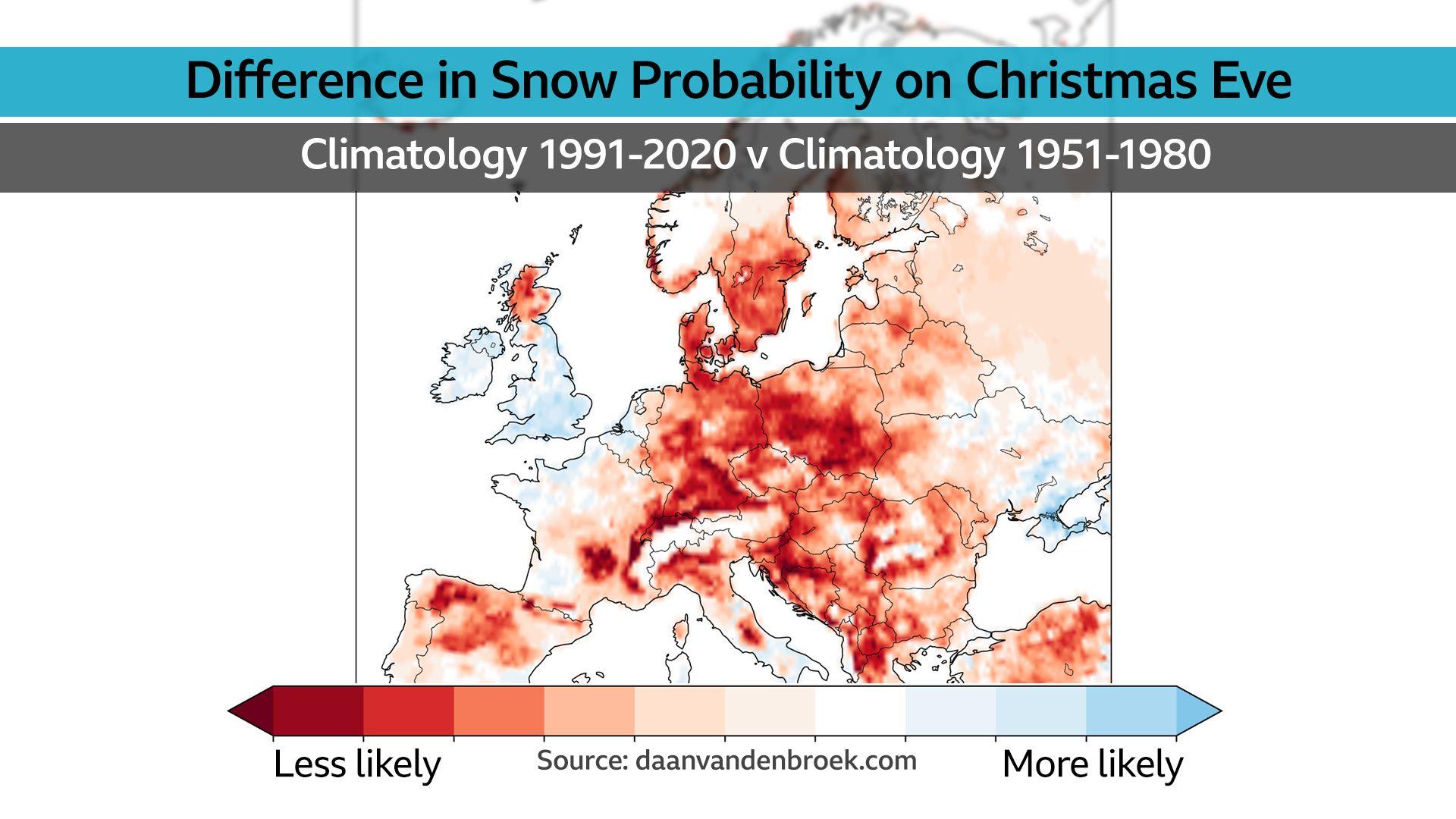
While Christmas Eve snowfall has become less frequent across much of Europe, some areas in the UK have experienced an upward trend in recent decades.
The ongoing rise in global temperatures has led to milder and wetter winters in the UK, generally diminishing the frequency of snowy Christmases compared to the 18th and 19th centuries.
Nevertheless, localized cold spells and snowfall remain possible, especially in northern and upland regions, preserving the chance of a picturesque white Christmas for many.
