
Table of Contents
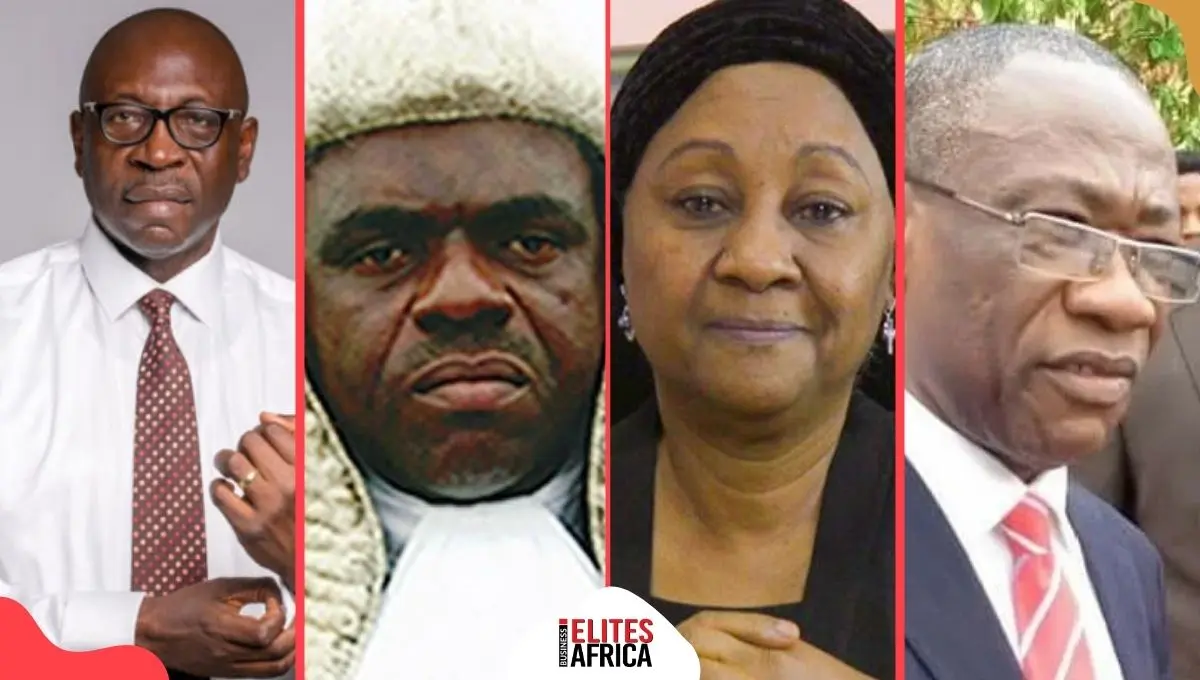
Throughout this extended legal saga, four different judges have presided over various phases of the trial, each stepping down for distinct reasons, contributing to the case’s prolonged timeline.
Justice Ahmed Mohammed: The Inaugural Judge

Justice Ahmed Mohammed, now serving on the Court of Appeal, was the first judicial officer to oversee Nnamdi Kanu’s case. Kanu was presented before him on December 23, 2015, shortly after his arrest. However, the trial did not progress under his watch. Kanu expressed a lack of confidence in receiving a fair hearing from Justice Mohammed, prompting the judge to voluntarily recuse himself to maintain judicial impartiality.
This initial withdrawal caused the first significant delay, necessitating the reassignment of the case to another judge.
Justice John Tsoho: The Second Judge and Subsequent Recusal

When the trial resumed on September 26, 2016, it was assigned to Justice John Tsoho, then the second most senior Federal High Court judge. Initially, there was hope the case would advance, but complications soon arose. Kanu’s defense team lodged a formal complaint with the National Judicial Council (NJC), accusing Justice Tsoho of issuing contradictory rulings regarding the confidentiality of prosecution witnesses during testimony.
The defense argued that such inconsistencies could undermine the fairness of the trial. In response to the petition, Justice Tsoho stepped down and returned the case to the Chief Judge at the time, Justice Ibrahim Auta. Notably, Justice Tsoho has since been appointed Chief Judge of the Federal High Court.
Justice Binta Nyako: The Longest-Serving Judge Amidst Controversy
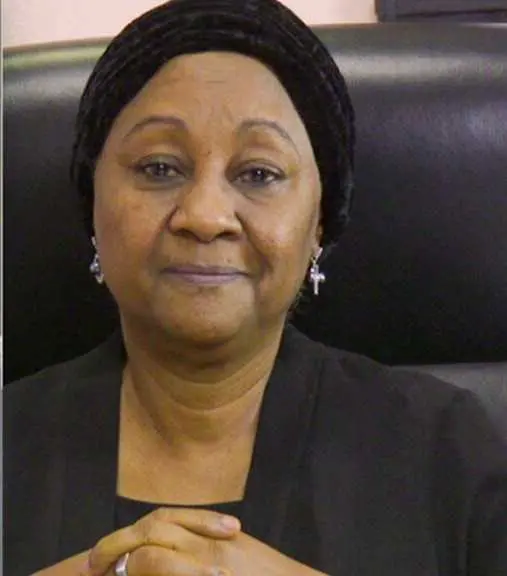
Following Justice Tsoho’s withdrawal, the case was reassigned in 2016 to Justice Binta Nyako, who would oversee the trial for several years, becoming the judge most closely linked with this protracted legal battle. However, in September 2024, the trial encountered another upheaval. Kanu accused Justice Nyako of disregarding a Supreme Court directive that guaranteed him unrestricted access to his legal counsel.
Due to this serious allegation, Justice Nyako recused herself, marking the third judicial withdrawal and further extending the trial’s duration.
Justice James Omotosho: The Judge Who Concluded the Trial
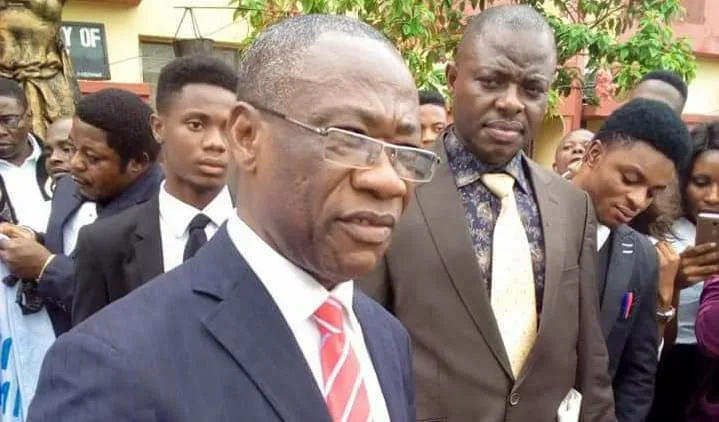
After Justice Nyako stepped aside, the case was handed over to Justice James Omotosho of the Federal High Court. Despite multiple efforts by Kanu’s defense team to suspend the proceedings, Justice Omotosho pressed forward and ultimately delivered the verdict in 2025. This judgment brought a conclusion, at least at the trial court level, to a case that had spanned nearly a decade and involved four different judges.
Summary and Broader Implications
The Nnamdi Kanu trial exemplifies the complexities and challenges within Nigeria’s judicial system, especially in high-profile cases involving political and security issues. The frequent changes in judicial oversight highlight concerns about impartiality and procedural fairness, which have significant implications for public trust in the legal process.
As of 2025, the case’s resolution at the trial court stage opens the door for potential appeals, which could further shape Nigeria’s legal landscape. This case also underscores the importance of judicial independence and the need for reforms to minimize delays caused by judicial recusals and procedural disputes.
