
Table of Contents
WHO Donates Over $2.3 Million in Medical Supplies to Boost Kenya’s Healthcare System
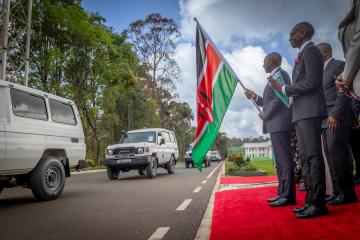
In a significant gesture to enhance Kenya’s healthcare capabilities, the World Health Organization (WHO) officially handed over vital medical equipment and supplies valued at more than US$ 2.3 million. The ceremony, held at State House Nairobi, was graced by His Excellency President William Ruto, symbolizing a strong partnership aimed at strengthening the nation’s health infrastructure and emergency response mechanisms.
Strengthening Emergency Medical Services Across Kenya
Dr. Mohamed Janabi, WHO Regional Director for Africa, personally delivered the comprehensive aid package to President Ruto and the Kenyan government. This donation includes 14 state-of-the-art ambulances, with eight outfitted for advanced life support to bolster the National Emergency Ambulance Service Center and the 999 emergency response system. The remaining six ambulances are dedicated to reproductive and maternal health services, targeting underserved counties such as Elgeyo Marakwet, Marsabit, Siaya, Samburu, and Tana River-regions where timely medical intervention is often hindered by geographic challenges.
Addressing Maternal Health: A Critical Priority
Highlighting the urgency of maternal health, Dr. Janabi remarked, “Pregnancy is a natural physiological process, not an illness, and no woman should lose her life during childbirth.” To support this vision, the donation includes 952 specialized reproductive and maternal health items, alongside training models designed to enhance obstetric care, family planning, and post-abortion services, particularly in remote and hard-to-reach areas. This initiative aligns with Kenya’s ongoing efforts to reduce maternal mortality rates, which, according to the latest WHO data, remain a pressing concern in several counties.
Enhancing Critical Care and Emergency Preparedness
In addition to ambulances and maternal health supplies, the package features 230 medical oxygen cylinders and nearly 3,000 emergency prevention and response tools. These resources are crucial for frontline health facilities to effectively manage outbreaks, critical care cases, and other health emergencies, including recent threats like cholera and Mpox. The increased oxygen capacity is particularly vital, given the global rise in respiratory illnesses and the ongoing need for robust critical care infrastructure.
Combatting Neglected Tropical Diseases with Mass Drug Administration
Dr. Joyce Onsongo, representing WHO’s Neglected Tropical Diseases (NTD) program in Kenya, presented 6.5 million tablets aimed at mass treatment campaigns for schistosomiasis and soil-transmitted helminths across 15 counties. “Over the past decade, sustained efforts have brought Kenya closer to eliminating many of these debilitating diseases,” she noted, underscoring the country’s progress under strong leadership and collaborative health initiatives.
Kenya’s Commitment to Universal Health Coverage
President William Ruto reaffirmed the government’s dedication to transforming the healthcare system through comprehensive reforms. “In partnership with county governments and development partners, we are advancing universal health coverage to ensure every Kenyan has access to quality health services,” he stated. This donation from WHO is expected to significantly enhance emergency referral systems, reduce maternal and neonatal mortality in high-risk areas, and improve the nation’s preparedness for public health emergencies.
Looking Ahead: Building a Resilient Health System
Dr. Janabi concluded by praising Kenya’s unwavering commitment to health equity. “WHO stands alongside Cabinet Secretary for Health, Hon. Aden Duale, county governments, and frontline health workers as we strive to build an inclusive health system where no one is left behind.” This partnership exemplifies the power of collective action in achieving sustainable health outcomes for all Kenyans.
