
Table of Contents
Historic Milestone: Cabo Verde, Mauritius, and Seychelles Eradicate Measles and Rubella in Sub-Saharan Africa
Brazzaville, 17 November 2025 — In a groundbreaking public health victory, Cabo Verde, Mauritius, and Seychelles have become the first nations in sub-Saharan Africa to officially eliminate measles and rubella. This landmark achievement was confirmed by the African Regional Verification Commission for Measles and Rubella Elimination, a body established by the World Health Organization (WHO).
Verification and Global Context
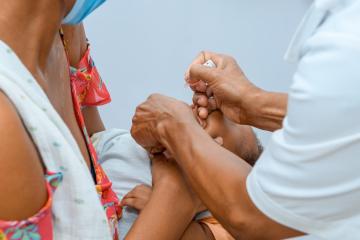
These three island nations now join a global cohort of 94 countries verified as having eliminated measles and 133 countries verified for rubella elimination. Both diseases are highly contagious viral infections transmitted through the air. Measles poses serious health risks, including severe complications and fatalities, particularly in young children, while rubella infection during pregnancy can lead to devastating congenital disabilities. Fortunately, both illnesses are preventable through effective vaccination programs.
Commission’s Assessment and Endorsement
Following a thorough review of extensive surveillance and immunization data during its October 2025 meeting in Johannesburg, South Africa, the Regional Verification Commission confirmed that Cabo Verde, Mauritius, and Seychelles have successfully halted endemic transmission of measles and rubella for over three years. These countries have also demonstrated robust disease monitoring systems capable of swiftly identifying and managing any imported cases, ensuring sustained protection.
“This accomplishment marks a pivotal moment in public health. Congratulations to Cabo Verde, Mauritius, and Seychelles for reaching this critical milestone in Africa’s fight against vaccine-preventable diseases,” stated Dr. Mohamed Janabi, WHO Regional Director for Africa. “Their success exemplifies the power of prioritizing prevention and vaccination. We must leverage this momentum to ensure every African child grows up safe and healthy.”
Cabo Verde’s Longstanding Commitment
Since 1998, Cabo Verde has fully financed its immunization initiatives, consistently maintaining vaccination coverage above 90% for over two decades. This unwavering political dedication, particularly towards measles and rubella immunization, has been instrumental in eradicating local transmission. The country has not reported a confirmed measles case since 1999, and rubella cases have been absent since 2010.
“Today, we celebrate a historic achievement not only for Cabo Verde but for the entire African continent,” remarked Honourable Jorge Figueiredo, Minister of Health, Cabo Verde. “This success reflects the power of collaboration among governments, healthcare workers, communities, and international partners. For years, measles and rubella threatened our children’s futures; now, that threat has been eliminated.”
Mauritius’ Resilient Response and High Coverage
Mauritius has not recorded any measles cases since 2019. All recent suspected cases of measles and rubella have been thoroughly investigated and ruled out. The country’s response to a measles outbreak in 2018-2019 included intensified vaccination campaigns and enhanced surveillance. By 2024, national coverage for the measles-mumps-rubella (MMR) vaccine reached an impressive 98% for the first dose and 96% for the second dose.
“This milestone is the result of decades of investment in resilient health systems, steadfast political will, and the dedication of our healthcare professionals and communities,” said Honourable Anishta Babooram, Junior Minister of Health and Wellness, Mauritius.
“However, elimination is not the final destination. Maintaining this status demands ongoing vigilance, rapid case detection, and immediate response to imported infections. Mauritius remains committed to sustaining high vaccination rates, enhancing border health security, and strengthening early warning mechanisms.”
Seychelles’ Sustained Immunization and Surveillance Excellence
For over 20 years, Seychelles has maintained vaccination coverage exceeding 95% for both doses of the measles vaccine. This success is supported by rigorous surveillance, laboratory confirmation, and health screenings at entry points. The last measles outbreak was effectively contained in 2020, and no rubella cases have been confirmed since 2016.
“Our persistent efforts have faced challenges, but thanks to the dedication of our Extended Programme on Immunization team, we have kept measles and rubella transmission at bay for decades,” stated Honourable Marvin Fanny, Minister of Health, Seychelles. “I am proud to announce that Seychelles has been certified measles and rubella free, a monumental achievement for our nation.”
Regional Progress and Impact
Since 2001, African countries have adopted comprehensive measles control strategies, including administering two doses of vaccine, conducting mass immunization campaigns, enhancing disease surveillance, and improving outbreak response and clinical care. These combined efforts have saved nearly 21 million lives between 2000 and 2023, representing a 79% decline in annual measles-related deaths.
Immunization coverage across Africa has steadily improved. In 2024, the first-dose coverage for the measles-rubella vaccine reached 71%, up from 67% in 2022, while second-dose coverage increased from 43% to 55%. Notably, five countries-Botswana, Cabo Verde, Mauritius, Rwanda, and Seychelles-have achieved the critical 95% coverage threshold necessary to interrupt virus transmission.
Global Partnership Driving Measles and Rubella Elimination
The Measles and Rubella Partnership, co-founded by WHO, UNICEF, the American Red Cross, the Bill & Melinda Gates Foundation, Gavi, the Vaccine Alliance, the UN Foundation, and the US Centers for Disease Control and Prevention, spearheads global efforts to eradicate these diseases. This coalition supports countries by increasing vaccination coverage, funding and coordinating supplementary immunization activities, investigating outbreaks, and providing technical and financial assistance. Additionally, it sustains a global laboratory network essential for monitoring measles and rubella.
