

Table of Contents
While journeying across Europe for professional engagements, Jephte Ioudom Foubi frequently reflects on the contrasts between the places he visits and his homeland. He observes the distinct ways data circulates within various sectors, the rapid advancements in cloud technologies, and how pivotal business choices often depend on nuanced factors that many tend to overlook.
On a routine flight from Brussels to Lisbon, a smile crossed his face as he contemplated his unexpected path. This was far from the future he envisioned as a business student in Cameroon. Yet, through determination and adaptability, he carved out a unique lifestyle-collaborating with European firms, traveling extensively across Africa, and settling in Portugal to operate his own technology consulting enterprise.
His story, however, extends well beyond the establishment of his company. It all began with an innate curiosity-a spark that ignited his passion for technology.
“I developed a deep fascination with all things tech,” Ioudom Foubi recalls. “From early mobile networks like 3G to the vision of a globally interconnected world, I explored it all.”
This intrigue eventually steered him away from a conventional corporate trajectory in Cameroon, across continents, and into a career he had never originally planned.
From Business Studies to Tech Enthusiast: An Unplanned Transition
Raised and educated in Cameroon, Ioudom Foubi initially aimed for a career in business management. After earning a degree in business administration, he entered the corporate realm, focusing on management and client-facing roles. His breakthrough came in 2014 when he joined Ericsson as an intern, contributing to MTN Cameroon’s pivotal 3G network deployment.
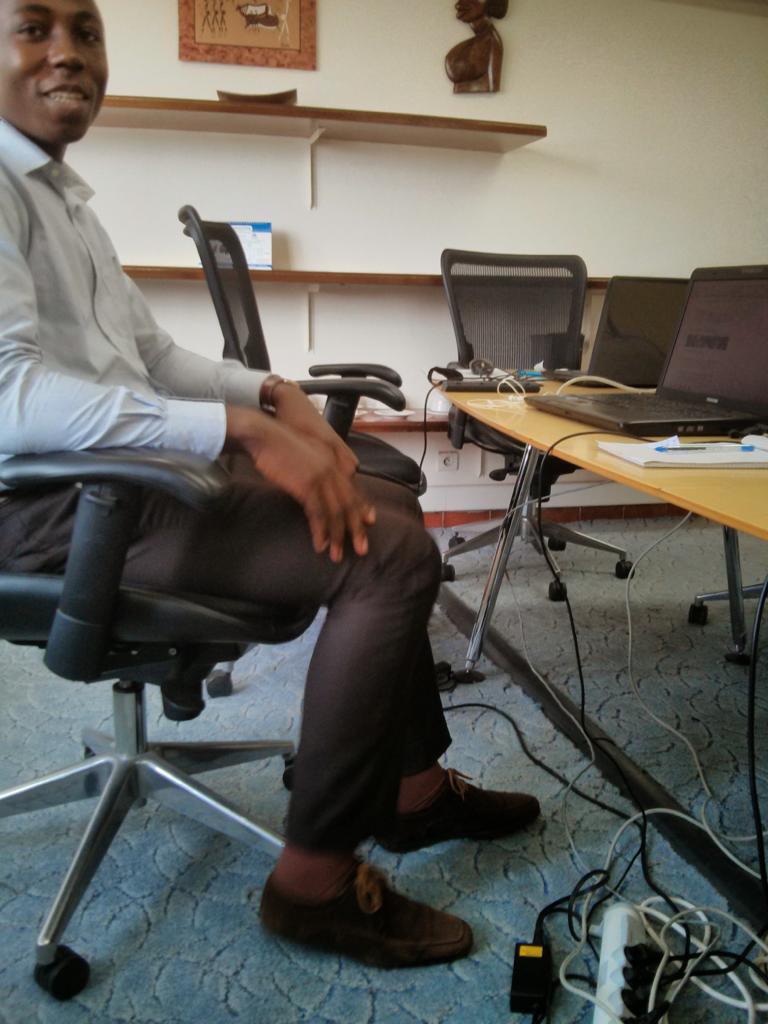
During this experience, he witnessed firsthand the intricate, unseen systems powering modern telecommunications. His responsibilities included managing logistics for one of Cameroon’s most significant telecom infrastructure projects-overseeing equipment storage, deployment preparations, and coordinating field teams. The stakes were high; even a minor equipment fault could derail the entire rollout.
One particular challenge left a lasting impression: field technicians often returned without proper receipts for expenses like fuel and meals, causing reimbursement delays and operational friction. Tasked with investigating why existing reporting tools failed to capture this data effectively, Ioudom Foubi discovered an automation tool introduced by a fellow intern. This tool enabled instant data collection and automatic organization, transforming a cumbersome manual process into a streamlined digital workflow.
“Seeing live responses as they came in was eye-opening,” he said. “What used to take days to compile was now done in a matter of hours, and I presented these findings to the entire company.”
This moment crystallized his understanding that technology could simplify complex human and procedural systems, making it tangible rather than abstract.
Following Ericsson, he transitioned to Kia Motors Cameroon as a marketing and sales assistant, where he gathered and analyzed market data from dealerships and competitors. His insights influenced strategic decisions, revealing his growing inclination toward analytics over traditional business roles.

These experiences prompted deeper reflection: “What if I fully immersed myself in technology instead of just supporting it from a business perspective? Could I pivot entirely?”
Determined to explore this path, he researched educational opportunities abroad that would facilitate a shift from management to tech-a transition difficult to achieve within Cameroon. This quest ultimately led him to Portugal in 2018, where he arrived on a study visa to pursue a career in data and business intelligence consulting.
Embracing Tech Consulting: Why Portugal Became Home
When asked why he selected Portugal over other destinations, Ioudom Foubi offers a meticulously reasoned response: quality education, widespread English proficiency, straightforward immigration processes, a burgeoning tech ecosystem, and, intriguingly, inspiration from a television series.
He compared programs across Europe and the United States, concluding that NOVA Information Management School in Lisbon offered the premier business intelligence curriculum at the time. The program’s full English instruction was a decisive factor, especially compared to countries like Germany, where courses often mixed languages.
Portugal’s recent acquisition of a decade-long hosting contract for the Web Summit-a major global technology conference-signaled a promising future as a European tech hub, attracting international companies and innovators.

On a more personal note, a Portuguese telenovela his mother watched painted vivid scenes of Lisbon and Porto’s daily life, subtly influencing his decision by helping him envision living there.
After acceptance and visa processing in Nigeria, he relocated to Lisbon. Initially expecting a business-heavy curriculum, he was surprised when the program pivoted to focus predominantly on emerging technologies like data engineering and artificial intelligence. Undeterred, he embraced the challenge.
“The course was about 90% technical and 10% management,” he explains. “As an international student, you just have to persevere.”
This education became his gateway into the tech startup ecosystem. He gained practical experience working part-time at an AI startup and later joined Accenture’s graduate program during the height of the COVID-19 pandemic, a period marked by accelerated cloud adoption across Europe.
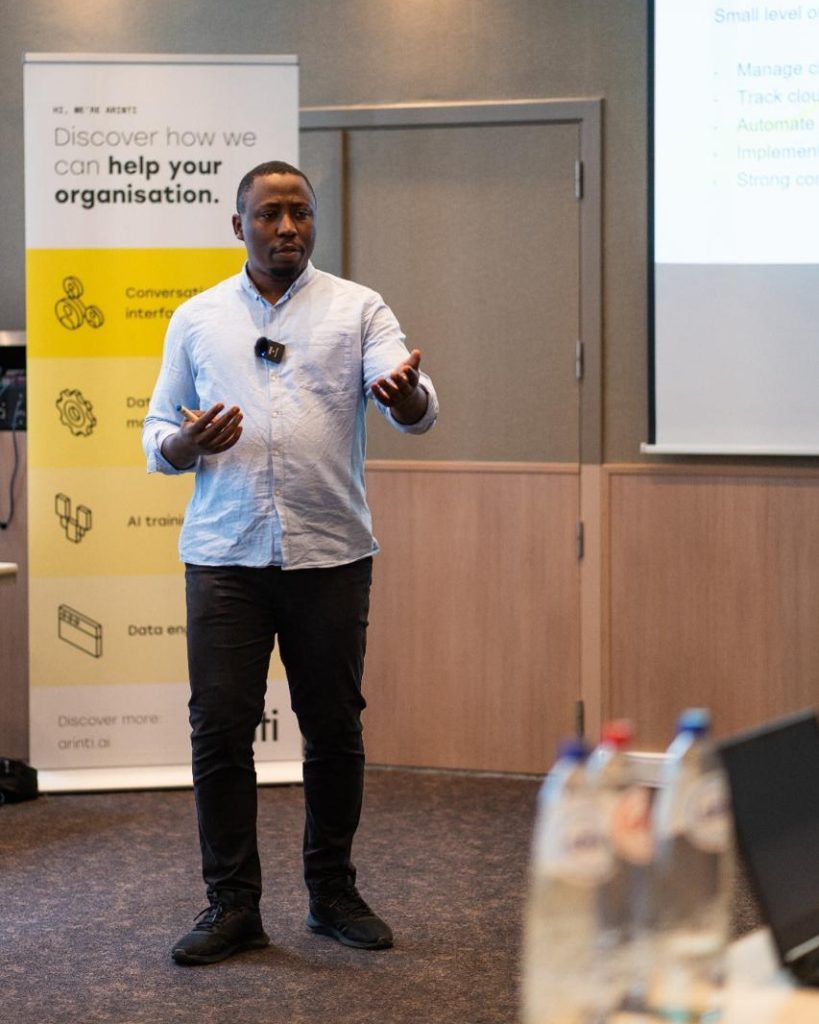
Cloud migration became his entry point into the tech consulting world. By the time he completed his master’s degree in 2021, the pandemic had reshaped the global work landscape, creating urgent demand for tech expertise. Rather than waiting for traditional job offers, he took a bold step and launched his own consulting firm.
“Even with just about a year of tech experience and as a foreigner, I decided to bet on myself,” he reflects.
Portugal’s streamlined process for establishing sole proprietorships made it feasible. With a tax number and an accountant, he began offering services and invoicing clients. His initial projects came through LinkedIn, remote contracting roles, HR outsourcing firms, and small IT consultancies.
As he delivered quality work, word-of-mouth referrals and recruiter outreach expanded his client base. His expertise grew from cloud migration to encompass data engineering, building analytics platforms, and integrating Microsoft Azure solutions. His clientele spans Belgium, Germany, and the Netherlands, though he surprisingly never worked directly with Portuguese companies despite residing there.
Portugal’s strategic location offers practical benefits: time zones align well with Europe, the US, and parts of Asia, facilitating global collaboration.
The cost of living, especially outside Lisbon, remains affordable. Portugal’s education system produces highly skilled tech graduates at competitive rates, attracting multinational companies and creating fertile ground for independent consultants like him.
“Many tech master’s programs here are very hands-on,” he notes. “Students graduate with practical skills, and the salary trade-off-about 20% less than in France or Germany-still allows for a comfortable lifestyle.”

His consulting business, compliant with tax and social security obligations, renews every three years, providing a stable foundation for his residency in Portugal.
Migration, Identity, and Opportunities in Portugal’s Tech Landscape
Ioudom Foubi’s migration journey to Portugal was primarily through education-a pragmatic choice given the challenges of switching careers from business to technology.
“Work permits would have been more complicated since I lacked prior tech experience,” he explains.
Portugal has earned a reputation as a welcoming haven for tech professionals and blockchain enthusiasts alike. Its favorable tax policies, growing blockchain sector, and remote work-friendly environment have attracted thousands of global talents.

“Blockchain companies are opening new offices monthly in Portugal, recruiting globally,” he notes.
However, immigration policies have evolved. The former Declaration of Interest visa, which eased residency transitions for foreigners, has become less predictable due to political shifts. Despite this, Portugal remains one of Europe’s most accessible countries for those already inside its borders-students, freelancers, and residents. The greater challenge lies in direct migration from African countries.

Nonetheless, opportunities persist. Tech companies continue to sponsor work visas, though competition is fierce and standards high. For Ioudom Foubi, the journey has been rewarding. Living in Portugal has unlocked access not only to European markets but also to a broader professional curiosity. His frequent travels between Europe and Africa enable him to cultivate relationships that enrich his consulting practice.

He has collaborated with Euroclear, a Belgium-based financial infrastructure firm, and now works with similar organizations in Ghana and Nigeria. Sometimes African implementations surpass European ones; other times, Europe offers innovations yet to be adopted in Africa. This dual perspective, he believes, is a consultant’s competitive advantage.
“The more you travel and understand the technological maturity across industries, the more opportunities you can create for yourself,” Ioudom Foubi concludes.
