

Table of Contents
Table of Contents
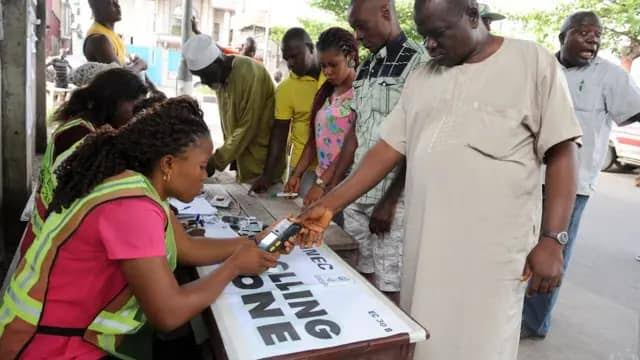
Technical Issues Stall Voting in Onitsha
On Saturday, the electoral process in Onitsha, Anambra State, experienced significant setbacks as the Bimodal Voter Accreditation System (BVAS) repeatedly malfunctioned across multiple polling stations. This disruption caused prolonged delays, leaving hundreds of voters who arrived early waiting for hours under the sun to cast their ballots.
Polling Unit 001 Faces Prolonged Standstill
At Polling Unit 001, located at St. John Primary School in Fegge Ward 5, election officials reported that preparations were completed before 8:00 a.m. However, the commencement of voter accreditation and balloting was hindered by persistent BVAS failures. Samuel Obiora, the Presiding Officer, explained, “We arrived around 8 a.m. and completed setup, but for nearly two hours, we have been unable to proceed. The Resident Accreditation Center (RAC) technician has inspected the device and promised to deliver a replacement.”
By 10:01 a.m., voting had yet to begin at this unit, with many residents expressing frustration over what they described as inadequate planning by the Independent National Electoral Commission (INEC), despite prior assurances of readiness. Some voters threatened to abandon the queue if the process did not start promptly.
BVAS: A Double-Edged Sword
INEC introduced the BVAS technology to enhance transparency in voter accreditation and the transmission of results. However, the device’s recurring technical glitches have sparked criticism, reminiscent of similar challenges encountered during the 2023 general elections, where malfunctions disrupted voting in several states nationwide.
Civil society organizations have voiced apprehensions regarding INEC’s technical preparedness for the current elections, emphasizing the need for swift resolution of these issues to maintain voter confidence.
Contrasting Experiences Across Anambra State
While Onitsha grappled with BVAS failures, other parts of Anambra reported smoother voting processes. Local government areas such as Aguata, Awka South, Orumba North, Nnewi North, and Nnewi South saw polling units open on time, with accreditation beginning as early as 8:30 a.m. Minor delays were mostly attributed to the late arrival of security personnel rather than technical faults.
INEC confirmed ongoing voting activities in these regions via a post on X (formerly Twitter), stating: “Voting ongoing @ PU 014, RA Achina 02, Aguata LGA, Anambra South Senatorial District. #AnambraDecides2025.”
Election Observers Report Mixed Outcomes
Observers from the Centre for Journalism Innovation and Development (CJID Africa) and The ICIR corroborated the early distribution of election materials in numerous wards. Nonetheless, they cautioned that the BVAS malfunctions in Onitsha and neighboring areas could negatively affect voter turnout if not promptly addressed.
INEC’s Response and Ongoing Efforts
At the time of reporting, INEC technicians were actively working to replace defective BVAS devices in the affected polling units to resume the voting process. The commission has reiterated its commitment to ensuring a credible and transparent election despite the technical setbacks.
Looking Ahead
As Nigeria continues to integrate technology into its electoral framework, the challenges faced in Onitsha underscore the importance of robust technical support and contingency planning. With over 20 million registered voters in Anambra State alone, ensuring the reliability of accreditation systems like BVAS is critical to safeguarding the integrity of the democratic process.
