
Table of Contents
Table of Contents
Did a Controversial Offside Decision Change the Outcome of Liverpool vs Manchester City?
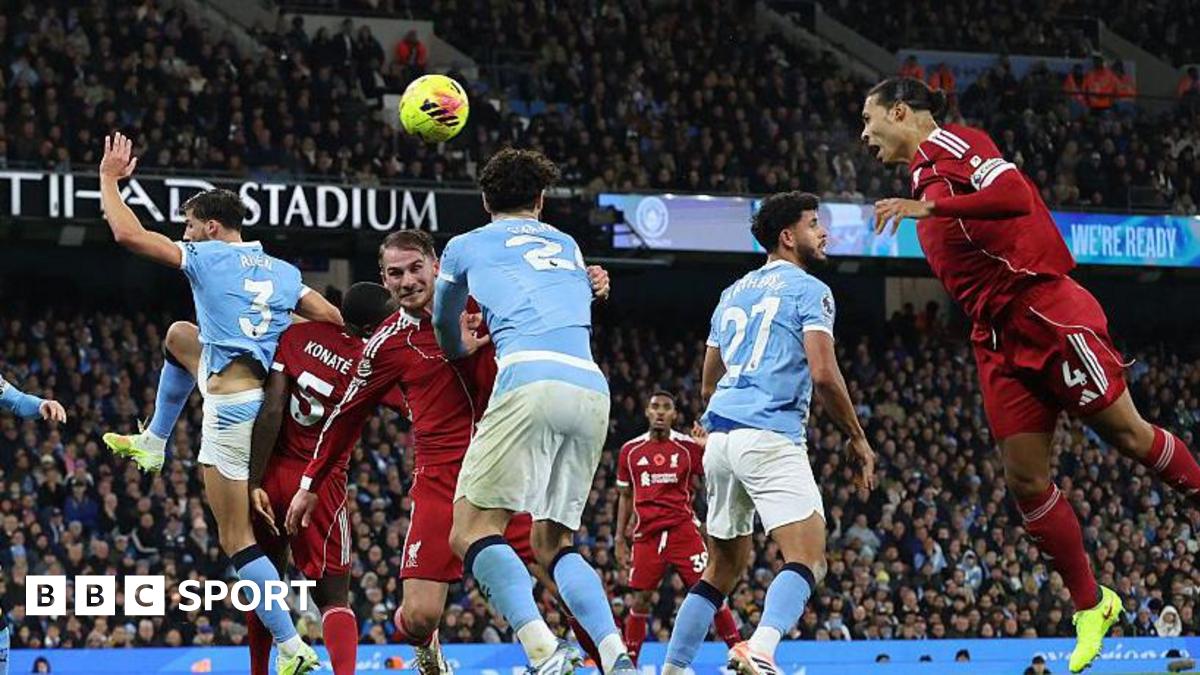
Despite Liverpool suffering a heavy 3-0 loss to Manchester City, a critical moment in the match sparked intense debate over whether the game’s momentum was unfairly shifted. At 1-0 down after Erling Haaland’s early strike, Liverpool appeared to have leveled the score in the 38th minute through a header by captain Virgil van Dijk.
Van Dijk expertly evaded Matheus Nunes and connected with Mohamed Salah’s curling corner just outside the six-yard box, sending a powerful header past City goalkeeper Gianluigi Donnarumma. The Reds’ defender celebrated what seemed a crucial equalizer.
However, the assistant referee flagged for offside, and after a VAR review, the goal was disallowed. The video officials ruled that Liverpool’s Andy Robertson, positioned offside near the goal line and behind Jeremy Doku, interfered with play by obstructing the goalkeeper’s line of sight, despite Robertson turning away from the ball.
Liverpool manager Arne Slot expressed his frustration post-match, calling the decision “obviously wrong” and referencing a similar incident involving Manchester City last season that was allowed. Slot argued that the disallowed goal could have positively influenced Liverpool’s performance.
Van Dijk himself chose to remain diplomatic, stating that the officials make the key decisions and that further discussion would only fuel media speculation during the international break.
Understanding the Offside Rule and Its Application
The offside law, outlined in Law 11 of the IFAB Laws of the Game 2025-26, is designed to prevent players from gaining an unfair advantage by being in an offside position when involved in active play.
The Premier League’s official match centre on X (formerly Twitter) clarified the decision, stating: “The referee’s offside call and subsequent VAR confirmation were based on Robertson being in an offside position and making an obvious action directly in front of the goalkeeper.”
Expert Opinions: Was the Offside Call Justified?
The disallowed goal ignited a wave of differing opinions among football analysts and former players.
Danny Murphy, ex-Liverpool midfielder, argued the goal should have stood, noting that Robertson was not obstructing Donnarumma’s view. Similarly, Gary Neville, former Manchester United defender, expressed uncertainty about the decision, pointing out that Robertson was positioned to the goalkeeper’s left and doubting whether Donnarumma’s save attempt was genuinely impeded.
Dion Dublin, ex-Aston Villa striker, acknowledged Robertson’s offside position but emphasized that he was not in the goalkeeper’s direct line of sight, suggesting that Jeremy Doku was more likely to distract Donnarumma.
Wayne Rooney, former Manchester United forward, concurred that the goal should have counted, stating that Robertson’s movement did not delay the goalkeeper’s reaction and that Donnarumma had a clear view of the ball throughout.
The Complexity of Subjective Offside Decisions
Offside rulings that hinge on a player’s indirect influence-without touching the ball-are inherently contentious. These calls demand nuanced judgment from referees and VAR officials, as they must assess whether an offside player’s presence or actions affect an opponent’s ability to play the ball.
Referee Chris Kavanagh, who officiated the Liverpool-Man City match, faced this exact challenge. Robertson’s ducking movement to allow Van Dijk’s header to pass was deemed an “obvious action” that potentially disrupted Donnarumma’s ability to react, fulfilling the criteria for offside interference.
Importantly, the offside law does not require certainty that the goalkeeper would have saved the ball-only that the offside player’s actions influenced the goalkeeper’s opportunity to make a play. Robertson’s proximity to Donnarumma within the six-yard box intensified this interpretation.
Had Robertson been positioned further away or outside the penalty area, the offside claim would have been weaker. Given the on-field officials’ decision and VAR’s support, overturning the call was unlikely.
Comparative Cases Highlighting Offside Interpretations
Similar incidents in recent seasons shed light on the fine margins involved in such decisions. In March 2020, Chris Kavanagh disallowed an Everton goal against Manchester United when Gylfi Sigurdsson, offside inside the six-yard box, deliberately moved to let Dominic Calvert-Lewin’s shot pass through, affecting the goalkeeper’s play.
Conversely, a late winner by John Stones for Manchester City against Wolves was initially ruled out due to Bernardo Silva’s offside position in the goalkeeper’s line of sight. However, VAR overturned this because Silva did not obstruct the goalkeeper’s view or movement, unlike Robertson’s ducking in the Liverpool game.
This season, similar scenarios involving Manchester United at Nottingham Forest and Leeds United against Bournemouth saw offside players making minor movements away from the ball. In those cases, officials judged that the players’ positions and actions did not materially impact the goalkeeper’s ability to play the ball, and the goals stood.
Conclusion: A Controversial but Defensible Decision
While the disallowed Van Dijk goal remains a hot topic among fans and pundits, the decision aligns with the current interpretation of offside laws emphasizing interference with an opponent’s play. The subjective nature of these calls means they will continue to provoke debate, especially in high-stakes matches.
As football evolves with VAR technology, referees and officials face increasing pressure to balance strict rule enforcement with the spirit of fair play. This incident underscores the ongoing challenges in applying offside rules consistently and highlights the importance of clear communication and transparency in officiating decisions.
