

Returning to Morocco for a second visit this year reveals a compelling insight: the country is a hub for fostering meaningful conversations that drive progress. Earlier in April, Marrakech was the stage for GITEX Africa, an event highlighting the rapid evolution of technology across the continent. Now, attention has shifted to Casablanca, where the Africa Financial Summit (AFIS) convenes to spotlight investment strategies and financial governance as key pillars for Africa’s future.
While Marrakech celebrated innovation and technological breakthroughs, Casablanca’s summit zeroes in on financial empowerment and policy frameworks. Over two days, more than 1,200 delegates-including policymakers, central bankers, financiers, and entrepreneurs-gathered under the theme “Unlocking Africa’s Financial Power: Time to Channel Domestic Capital for the Future.” Hosted by Jeune Afrique Media Group in partnership with the International Finance Corporation (IFC) and the Moroccan government, the summit tackled a critical challenge: how can Africa better leverage its own financial assets to drive sustainable development?
Advancing Africa’s Financial Independence for Sustainable Development
In a global environment characterized by tightening liquidity, rising interest rates, and cautious investment sentiment, the summit highlighted the pressing need to mobilize Africa’s substantial domestic capital pools. Amir Ben Yahmed, AFIS President, remarked, “Africa’s wealth is abundant-it lies within our banks, capital markets, insurance funds, and increasingly through mobile financial platforms. What we need are visionary regulations and strong institutional frameworks to channel this capital into productive investments.”
The discussions emphasized that Africa’s economic sovereignty is deeply intertwined with its financial autonomy. Makhtar Diop, IFC Managing Director, stressed, “Achieving sustainable growth depends on effectively harnessing African savings, strengthening regional capital markets, and attracting global investments. This collective mobilization is essential for the continent’s future.”
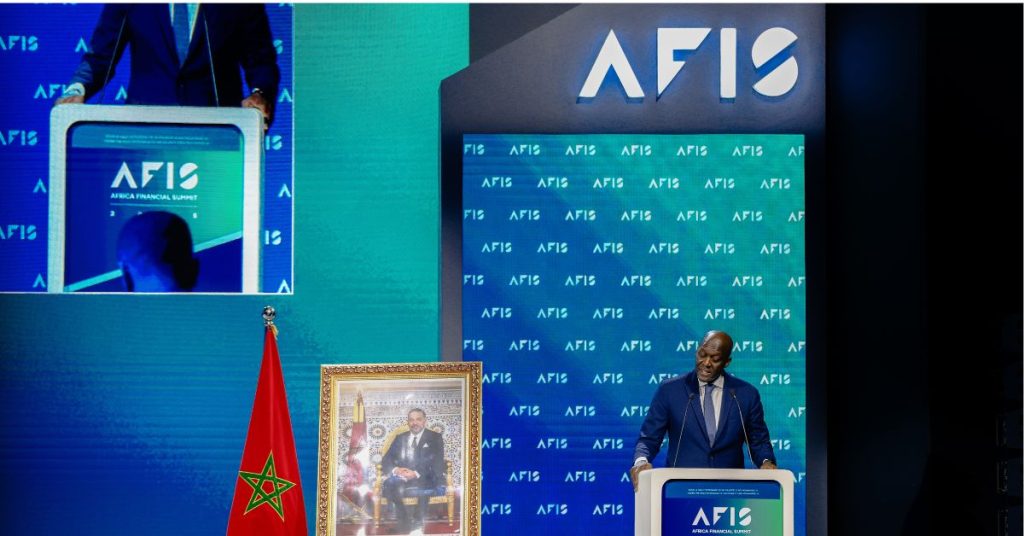
Despite institutional investors in Africa managing assets exceeding $2.1 trillion-covering pension funds, insurance portfolios, and sovereign wealth funds-less than 10% of these resources are currently invested within the continent, according to the African Development Bank (AfDB). At the summit’s opening, Morocco’s Minister of Economy and Finance, Nadia Fettah, underscored, “Financial sovereignty is more than a slogan; it is a generational duty. Africa does not seek isolation but aims to reclaim control over its economic destiny while maintaining global engagement.”
Africa faces an annual infrastructure and industrialization funding gap exceeding $100 billion, as reported by AfDB. With international capital flows becoming more constrained, African nations are increasingly compelled to develop homegrown financial solutions-a core objective of AFIS.
Concrete initiatives emerged alongside the dialogue. Ecobank Group, a leading pan-African financial institution, partnered with Proparco-the private sector financing arm of the French Development Agency-to establish a €10 million ($10.7 million) Trade Finance Guarantee Facility for Ecobank Chad. This program, part of the broader Choose Africa initiative supporting startups and micro, small, and medium enterprises (MSMEs), aims to finance essential imports of raw materials critical to Chad’s manufacturing and agricultural sectors, addressing local supply chain challenges.
Djalal Khimdjee, Proparco’s Deputy CEO, highlighted that integrating Ecobank Chad into this program “enables local businesses to secure vital inputs and better integrate into global value chains.” Such public-private partnerships serve as scalable models for enhancing Africa’s financial self-sufficiency by improving liquidity and cross-border capital flows.
Mitigating Non-Performing Loans: Unlocking Banking Sector Potential
A pivotal session at the summit addressed the challenge of non-performing loans (NPLs) under the panel titled “NPL breathing room: How could expanded secondary markets ease pressure on banks?” NPLs continue to weigh heavily on African banks, with approximately 16% of loans classified as non-performing in Kenya and the Central African Economic and Monetary Community (CEMAC), and around 9% in the West African Economic and Monetary Union (WAEMU). These high levels of distressed assets restrict credit availability and hamper banks’ ability to support economic growth.
Cláudia Conceição, IFC’s Director for Southern Africa, explained, “The objective extends beyond merely cleaning up bank balance sheets; it is about unlocking capital trapped in these non-performing assets to finance productive sectors of the economy.”
Reliable and transparent data emerged as a cornerstone for developing effective secondary markets for distressed debt. Conceição emphasized, “Access to high-quality data is critical to building trust and transparency, which are prerequisites for successful secondary market operations.”
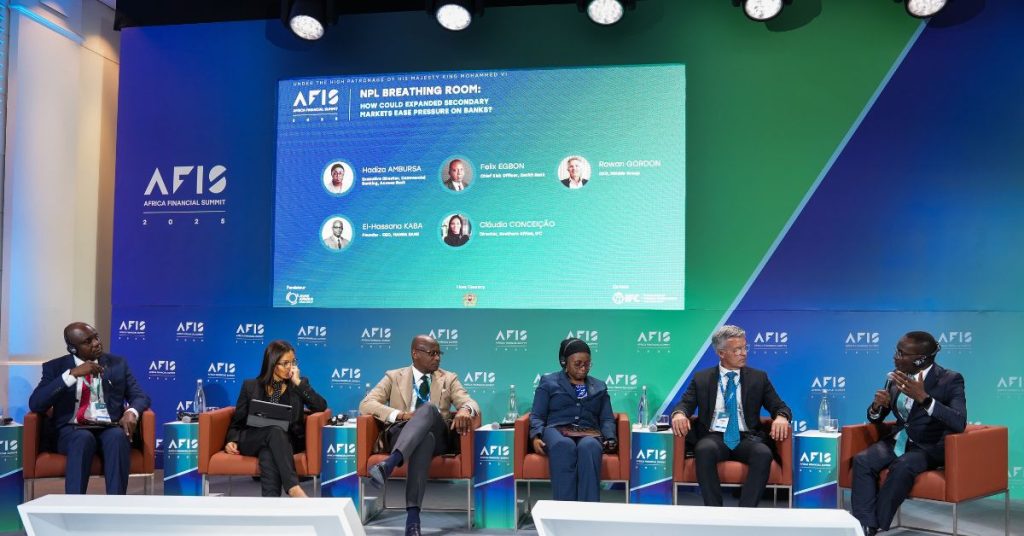
Regulatory fragmentation across different African regions further complicates efforts to address NPLs. Hadiza Ambursa, Executive Director of Commercial Banking at Access Bank, noted, “Limited awareness and understanding of innovative financial instruments within existing capital markets impede progress.”
Rowan Gordon from Nimble Group introduced an innovative solution, describing their platform as a “private sector debt forgiveness engine.” Nimble acquires distressed debt at significant discounts-sometimes writing off up to 70%-to facilitate economic recovery and restore financial health.
Felix Egbon, Chief Risk Officer at Zenith Bank, summarized the consensus: “Recycling capital through secondary markets is essential.” Efficient secondary markets for bad loans could enable African banks to reduce risk exposure and unlock billions in new lending capacity.
Ultimately, the true measure of the summit’s impact will be the momentum generated afterward-whether policymakers, investors, and financial institutions can translate discussions into actionable policies and frameworks that accelerate access to finance across Africa. Envisioning a prosperous future is crucial, but the ability to finance it effectively amid complex challenges will determine the continent’s trajectory.
