
Table of Contents
Table of Contents
Unveiling Manouria morla: A Newly Identified Miocene Tortoise Species from Central Europe
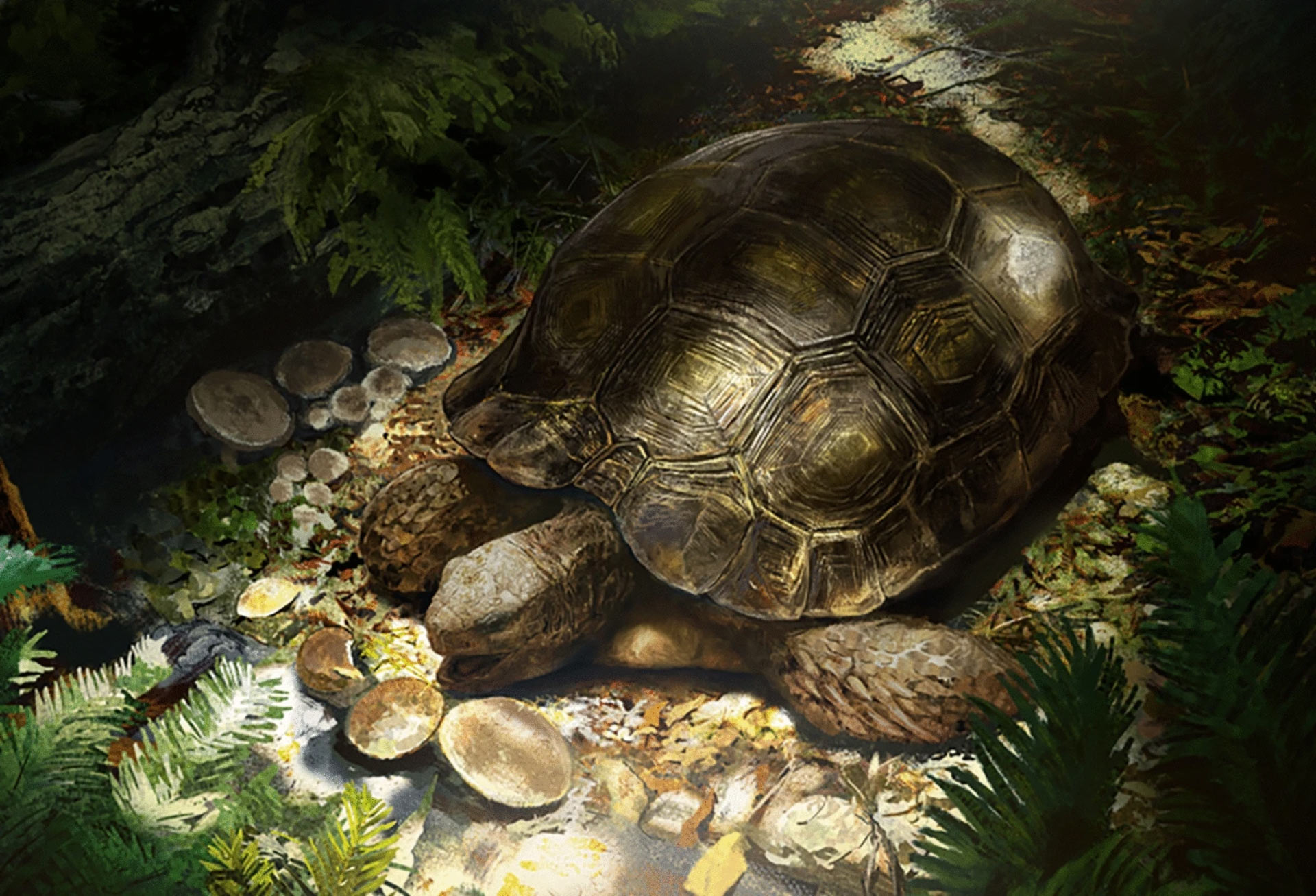
Researchers from the Institute of Paleobiology at the Polish Academy of Sciences, in collaboration with the Universitat Autònoma de Barcelona, have introduced a previously unknown species within the tortoise genus Manouria. This discovery is based on fossilized remains excavated in the Czech Republic, shedding new light on the evolutionary history of these reptiles.
Early Miocene Habitat and Geological Context
Manouria morla inhabited swampy environments in what is now the Czech Republic during the Early Miocene epoch, approximately 20 to 17 million years ago. The fossils were uncovered at the Ahníkov I site, located in the Most Basin of Bohemia, an area long recognized for its ancient wetlands characterized by flooding rivers and shallow lakes.
Notably, the site has yielded numerous juvenile crocodilian fossils and possibly choristoderes, indicating a near-shore wetland ecosystem. The presence of Manouria morla suggests a habitat dominated by broadleaf evergreen wet forests with distinct wet and dry seasons, resembling the modern-day environment of Thailand’s Kaeng Krachan National Park.
Significance Within the Manouria Genus and Testudinidae Family
This species represents the earliest known member of the Manouria genus, which today is restricted to Southeast Asia and comprises four extinct and two extant species, including the Asian forest tortoise (Manouria emys) and the impressed tortoise (Manouria impressa).
According to Dr. Milan Chroust and his team, tortoises belonging to the family Testudinidae are highly adapted to terrestrial life, predominantly thriving in semi-arid regions. They classify tortoises with a carapace length between 35 and 75 cm (14 to 30 inches) as medium to large-sized, while those exceeding 75 cm are considered giants. The newly discovered Manouria morla had an estimated shell length of about 50 cm (20 inches), placing it in the medium-large category.
The Testudinidae family is phylogenetically divided into three principal groups: the basal genera Gopherus and Manouria (either as foundational branches or sequential offshoots), alongside the Geochelona and Testudona clades, which together form the subfamily Testudininae.
Expanding the Paleobiogeographic Range of Manouria
The discovery of Manouria morla significantly broadens the known historical distribution of the genus, extending its range from its current Southeast Asian confines to Central Europe. This finding supports the hypothesis that Manouria originated in Europe shortly before the Middle Miocene Climatic Optimum, a period of global warming approximately 17 to 15 million years ago, before dispersing eastward into Asia where it continues to exist today.
Publication and Further Research
The detailed description and analysis of Manouria morla were published on October 3, 2025, in the Swiss Journal of Palaeontology. This research not only enriches our understanding of tortoise evolution but also provides valuable insights into Miocene ecosystems in Europe.
Reference: M. Chroust et al. (2025). Manouria morla sp. nov., the Ancient One: an Early Miocene large tortoise from the Swamps of Ahníkov, Czechia. Swiss Journal of Palaeontology, 144, 63. DOI: 10.1186/s13358-025-00400-6
