
Table of Contents
Table of Contents
- Cheney’s Influence on Trump’s Exercise of Presidential Authority
- The Expansion of Executive Power Since 9/11
- How Trump Utilizes Cheney’s Executive Strategies
- Military and Surveillance Powers as Tools of Control
- Detention Practices and Deportation Parallels
- Domestic Surveillance and Security Targeting Emerging Threats
- Internal Divisions in the GOP and Cheney’s Legacy
- Final Thoughts on Cheney’s Lasting Impact on the Presidency
The Expansion of Executive Power Since 9/11
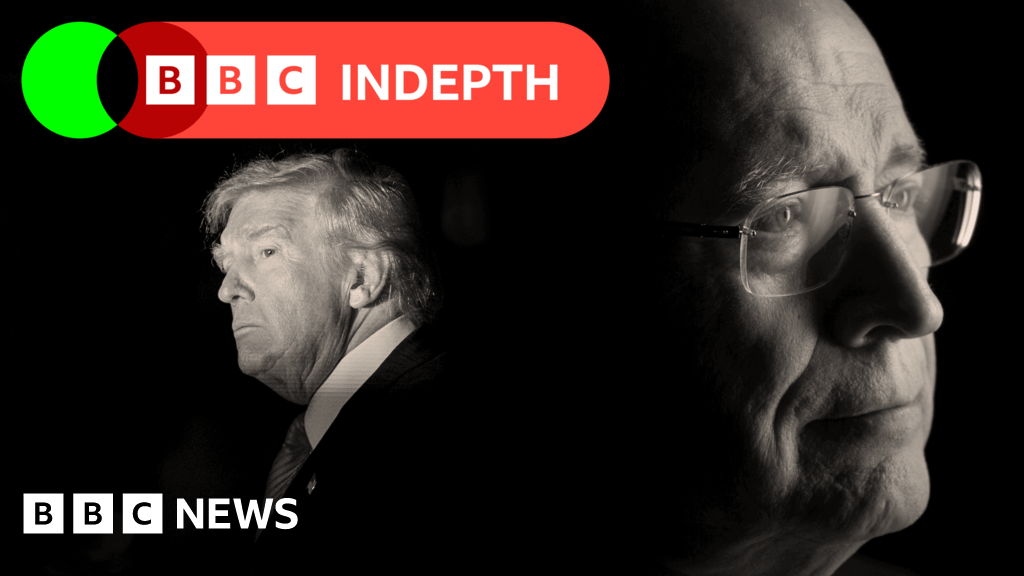
Following the tragic events of September 11, 2001, former Vice President Dick Cheney played a pivotal role in dramatically enlarging the scope of presidential authority. Over two decades later, former President Donald Trump has drawn heavily on the institutional precedents and legal frameworks that Cheney helped establish to advance his own political agenda. Although both leaders prioritized strengthening executive power, their visions for the Republican Party and policy directions often diverged sharply.
Cheney’s political journey, which began during the Nixon era and extended through multiple administrations, was marked by a steadfast belief in a robust executive branch. His tenure as Vice President under George W. Bush coincided with a national crisis that galvanized American unity reminiscent of the post-Pearl Harbor era. Seizing this moment, Cheney was instrumental in redefining the presidency’s reach, particularly in matters of national security and foreign policy.
As chronicled by Barton Gellman in his 2008 biography Angler, Cheney championed an aggressive “war on terror” strategy that prioritized executive discretion over traditional checks and balances, enabling the Bush administration to act with unprecedented latitude.
How Trump Utilizes Cheney’s Executive Strategies
Donald Trump inherited this expanded presidential authority and adapted it to fit his own political style and objectives. Unlike the post-9/11 era, which saw broad bipartisan support for enhanced executive powers, Trump’s use of “national emergency” declarations and other unilateral actions often sparked intense public debate and partisan division.
In his later years, Cheney voiced serious apprehensions about Trump’s influence on American democracy, particularly after Trump’s refusal to concede the 2020 presidential election. In a notable 2024 endorsement, Cheney supported Democrat Kamala Harris, describing Trump as “the greatest threat to our republic.” Trump, in turn, disparaged Cheney as “the architect of endless, futile wars,” underscoring the deep ideological and personal rift between the two figures.
Military and Surveillance Powers as Tools of Control
Both Cheney and Trump have employed military force and surveillance as central components of their governance strategies. Stephen Miller, a senior advisor to Trump, asserted in 2017 that presidential powers to safeguard the nation are “extensive and unquestionable,” echoing the expansive executive philosophy championed by Cheney.
While Trump distanced himself from Cheney’s interventionist policies, such as the Iraq War, he nonetheless authorized military operations that circumvented traditional congressional oversight. For instance, in June 2023, Trump ordered airstrikes against Iranian targets, citing nuclear threats-a rationale reminiscent of Cheney’s justification for the 2003 Iraq invasion.
More recently, the Trump administration has designated drug traffickers as “enemy combatants,” conducting military strikes against suspected narcotics shipments in international waters. A 2024 investigation by The Washington Post revealed that the Justice Department informed Congress these operations do not require legislative approval, effectively bypassing the War Powers Resolution of 1973.
Cheney’s administration faced similar criticism for broadly interpreting the 2001 Authorization for Use of Military Force to justify global counterterrorism missions. However, Trump’s actions often proceeded without even this limited congressional authorization, signaling a further shift toward unilateral executive action.
Detention Practices and Deportation Parallels
Cheney’s foreign policy heavily relied on the controversial practice of “extraordinary rendition,” transferring terrorism suspects to secret detention centers to avoid judicial oversight. The Bush administration established the Guantanamo Bay detention facility and collaborated with foreign governments to operate clandestine “black sites” for interrogation purposes.
Trump’s administration echoed these tactics domestically by expanding detention centers, including at Guantanamo Bay, to hold undocumented immigrants awaiting deportation. Additionally, his government negotiated agreements with foreign nations to accept deportees, circumventing legal challenges that only partially slowed these efforts.
In Supreme Court filings, Trump’s legal team argued that the president holds exclusive authority over foreign relations and national security decisions, including the removal of non-citizens, effectively sidelining federal courts.
Domestic Surveillance and Security Targeting Emerging Threats
Building on the surveillance expansions initiated during Cheney’s vice presidency, Trump intensified monitoring of domestic groups he identified as threats. While the Bush administration primarily focused on Muslim communities suspected of extremism, Trump targeted left-wing organizations such as Antifa, accusing them of orchestrating violent protests against his administration.
Furthermore, the Trump administration revoked visas and residency permits for foreign nationals residing in the U.S. who were alleged to hold anti-American or antisemitic beliefs, broadening executive control over immigration and national security matters.
Internal Divisions in the GOP and Cheney’s Legacy
After Cheney’s passing, the White House ordered flags to be flown at half-staff, signaling official respect. However, this gesture belies the deep ideological schism within the Republican Party between the traditional conservative establishment embodied by Cheney and the populist, Trump-led faction that has reshaped the party’s identity.
While many conservatives have lauded Cheney’s influence, Trump has notably refrained from public tribute. Their longstanding personal and political conflicts have been especially visible in Trump’s confrontations with Cheney’s daughter, Liz Cheney, a vocal critic of Trump who played a significant role in investigating the January 6 Capitol insurrection.
Despite their differences, both Cheney and Trump shared a conviction in a strong, assertive presidency capable of decisive action, highlighting a persistent trend toward expanding executive power that continues to shape American governance.
Final Thoughts on Cheney’s Lasting Impact on the Presidency
Dick Cheney’s vice presidency fundamentally transformed the American executive branch, establishing precedents that have empowered successors like Donald Trump to wield broad authority under the banner of national security and political strategy. As debates over the limits of presidential power persist, the legacies of these two influential leaders remain central to understanding the evolving dynamics between security, civil liberties, and democratic governance.
