
Table of Contents
Table of Contents
- Global Markets React to U.S. Threats Against Nigeria
- Allegations and Threats: A Political Storm
- Investor Confidence Under Pressure
- Market Volatility and Capital Flight Risks
- Currency Fluctuations: The Naira’s Fragile Stability
- Challenges to Nigeria’s Eurobond Issuance
- Implications for U.S.-Nigeria Relations and Fiscal Health
- Looking Ahead: Navigating Uncertainty with Resilience

Global Markets React to U.S. Threats Against Nigeria
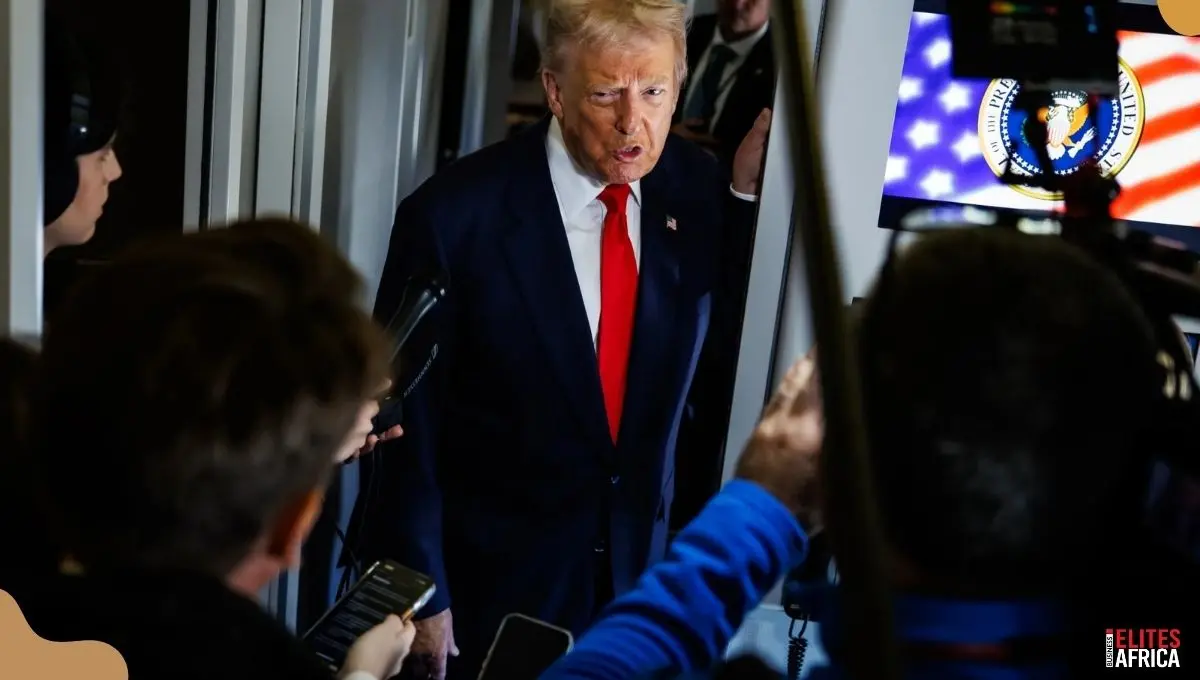
When former U.S. President Donald Trump publicly threatened military intervention in Nigeria via his official X (formerly Twitter) account, it sent ripples through international financial markets. His declaration raised alarms about Nigeria’s already delicate economic condition, sparking concerns over potential instability that could undermine recent progress.
Allegations and Threats: A Political Storm
Trump labeled Nigeria a “Country of Particular Concern,” accusing the nation of permitting Islamic extremist groups to perpetrate genocide against Christian communities. He further warned of cutting off U.S. aid and instructed the Pentagon to “prepare for possible action.” While a full-scale invasion remains speculative, the political implications alone have unsettled investors and analysts alike.
Investor Confidence Under Pressure
Financial experts caution that such statements could erode the fragile trust investors have begun to place in Nigeria’s economy. Having recently been removed from the Financial Action Task Force (FATF) grey list-a milestone expected to attract increased foreign capital-the country now faces renewed skepticism. Bosun Obembe, a treasury analyst based in Lagos, remarked that although the reforms are unlikely to be immediately reversed, the pace of economic recovery might slow as some impact investors reconsider their positions.
Market Volatility and Capital Flight Risks
Political instability often triggers swift reactions in global markets. According to finance specialist Christopher Akinbobola, Trump’s remarks could lead to heightened volatility in Nigeria’s financial sectors, including rising bond yields and a potential withdrawal of foreign portfolio investments. He added that foreign direct investment (FDI) might become more vulnerable, as multinational corporations hesitate to commit resources amid reputational risks, particularly in critical industries such as energy, telecommunications, and fintech.
Currency Fluctuations: The Naira’s Fragile Stability
Despite recent fluctuations in global oil prices, the Nigerian naira has demonstrated unexpected resilience, closing October at ₦1,421.7 per U.S. dollar-an appreciation of ₦33.50 from previous levels. This stability is largely attributed to the Central Bank of Nigeria’s (CBN) market reforms and a resurgence of investor interest. However, renewed geopolitical tensions could quickly reverse these gains, as investor confidence remains a key pillar supporting the naira’s value.
Challenges to Nigeria’s Eurobond Issuance
Nigeria had planned to issue approximately $2.3 billion in Eurobonds later this year to bolster foreign reserves and fund essential reforms. Yet, the recent political rhetoric threatens to derail these plans. Global investors may now perceive Nigeria as a higher-risk environment, increasing borrowing costs for the government. Emerging markets strategist Kemi Akinyemi emphasized that the perception of risk often outweighs actual conditions, noting that terms like “sanctions” or “intervention” prompt fund managers to reassess frontier market exposures, driving up the risk premium even if no direct action occurs.
Implications for U.S.-Nigeria Relations and Fiscal Health
The United States has been a vital partner for Nigeria, providing over $7.8 billion in security and humanitarian aid over the past decade. Any suspension or reduction of this support could exacerbate Nigeria’s fiscal challenges, widening budget deficits and forcing the government to seek costlier borrowing options. Akinbobola warns that such developments could destabilize fiscal balance, increase domestic borrowing costs, and strain the currency-debt servicing relationship.
While Trump’s statements may not immediately translate into concrete actions, their long-term effects on Nigeria’s economic reputation could be profound. Political risk is closely monitored by global investors, and once a country is tagged as unstable, restoring confidence can take years. Nigerian policymakers face the delicate task of reassuring investors, maintaining diplomatic ties, and continuing economic reforms to safeguard recent achievements.
If tensions escalate or sanctions are imposed, Nigeria risks higher borrowing costs, capital flight, and a return to economic volatility. Conversely, successful diplomacy and sustained reform efforts could enable Nigeria to withstand this challenge, underscoring the nation’s enduring capacity for resilience amid global uncertainties.
