

Table of Contents
Table of Contents
- Unveiling a Kurdish Crime Network Exploiting Migrants in UK Mini-Marts
- How Migrants Are Illegally Employed in Mini-Marts Across Britain
- Government Response and the Scale of the Problem
- Key Findings from the Investigation
- Voices from Within the Kurdish Community
- Inside the Network: Mini-Mart Sales and Illegal Trade
- Legal Restrictions and Evasion Tactics
- Concealing Illegal Stock: From Stash Cars to Hidden Compartments
- Specialized Builders Crafting Concealment Solutions
- The Role of Ghost Directors in the Network
- Connections and Patterns of Evasion
- Geographical Spread and Socioeconomic Context
- Personal Stories: The Human Cost of Illegal Employment
- Government Measures and Enforcement Efforts
Unveiling a Kurdish Crime Network Exploiting Migrants in UK Mini-Marts
By Ed Thomas, UK Editor; Patrick Clahane; Rebecca Wearn
How Migrants Are Illegally Employed in Mini-Marts Across Britain
A recent BBC investigation has uncovered a sophisticated Kurdish criminal network facilitating illegal employment of migrants in mini-marts scattered along High Streets throughout the UK. This illicit operation involves “ghost directors” who lend their names to official company documents without participating in the businesses’ daily management.
Two undercover Kurdish journalists, posing as asylum seekers, were informed about the ease of acquiring and running mini-marts, with lucrative profits generated primarily through the sale of illegal cigarettes and vapes. Our research has connected over 100 businesses-including mini-marts, barbershops, and car washes-from Dundee in Scotland to Devon in the south of England-to this network. Experts in financial crime warn that the scale of this operation is likely far greater.
Government Response and the Scale of the Problem
Home Secretary Shabana Mahmood responded firmly to the findings, stating, “Illegal working and linked organised criminality create incentives for unlawful immigration. We will not tolerate this.”
The investigation reveals how asylum seekers, who are generally prohibited from working while their claims are processed, are nonetheless operating openly in these shops. One individual disclosed that weekly earnings from illicit tobacco sales could reach up to £3,000.
These “ghost directors” often have dozens of companies registered under their names at Companies House but are not involved in the businesses’ operations. Many of these companies are dissolved after about a year, only to be re-established with minor changes to evade detection.
Key Findings from the Investigation
- An asylum seeker, whose claim was rejected, attempted to sell a mini-mart for £18,000.
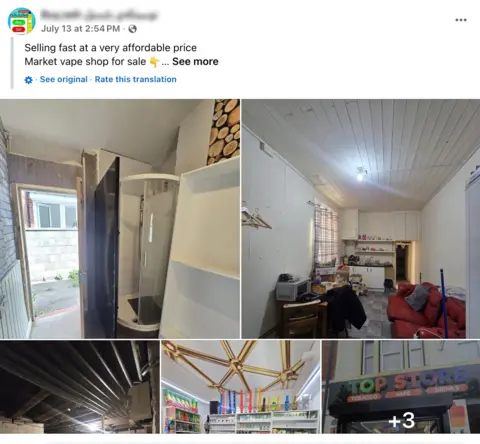
- A Kurdish Facebook group actively lists dozens of mini-marts, barbershops, car washes, and takeaways for sale.
- “Ghost directors” charge illegal workers up to £300 monthly to register businesses in their names.
- Kurdish builders offer to construct sophisticated hiding places for illegal cigarettes and vapes designed to evade sniffer dogs.
- Asylum seekers, stuck in legal limbo, work grueling 14-hour shifts for as little as £4 per hour.
Voices from Within the Kurdish Community
The two Kurdish journalists behind this investigation are acutely aware of the sensitive nature of immigration issues and the potential for such reports to exacerbate tensions. One, a former asylum seeker, emphasized the importance of exposing illegal activities to clarify that these actions do not represent the broader Kurdish community.
Inside the Network: Mini-Mart Sales and Illegal Trade
Over a four-month period, the journalists monitored a Kurdish Facebook group where businesses were frequently advertised for sale. New listings appeared weekly, including mini-marts in Crewe, Hull, and Liverpool. Sellers openly discussed running shops that traded in illegal cigarettes.
In Crewe, a shopkeeper known as Surchi offered to sell his mini-mart, Top Store, for £18,000 cash. He claimed that asylum seekers could easily own and operate such shops without official work permits. Surchi himself arrived in the UK in 2022 as a Kurdish asylum seeker but said his claim was denied. Although he later claimed to have legal paperwork to work, he did not provide evidence when requested.
Legal Restrictions and Evasion Tactics
Asylum seekers in the UK are generally barred from employment during claim processing, except under strict conditions and limited job categories, none of which include retail positions like shop management. Surchi revealed he paid a man named “Hadi” approximately £250 monthly to be listed as the official company director, a common tactic to avoid immigration enforcement scrutiny.
He admitted to never paying council tax and advised that official company registration was unnecessary. According to Surchi, enforcement visits were rare and ineffective, with only one visit in five years when he was absent.
Surchi described using a “stash car” to hide most of his illegal cigarette and vape stock until after Trading Standards officers ended their daily inspections. He also demonstrated how to create secret storage spaces in the shop’s basement and manipulate the electricity meter to avoid utility bills.
During the visit, Surchi sold vapes to teenagers as young as 12, showing blatant disregard for legal restrictions. Payments were processed through a card machine linked to his cousin’s bank account, who owns another mini-mart nearby.
Specialized Builders Crafting Concealment Solutions
On Facebook, Kurdish builders advertised their services to construct elaborate hiding places for illegal tobacco products. One builder showcased a £6,000 custom-made vending machine hidden in a loft, designed to dispense cigarettes through a concealed chute, purportedly fooling sniffer dogs used by Trading Standards.
The Role of Ghost Directors in the Network
Our investigation identified a network of ghost directors, with Hadi Ahmad Ali from Birmingham emerging as a central figure. Registered as a director of over 50 businesses, including mini-marts and car washes, Mr. Ali confirmed to undercover reporters that he could register shops in his name for a monthly fee of £250-£300 and even assist in obtaining bank cards.
Despite being disqualified from acting as a company officer in October 2024 due to illegal cigarette sales linked to his name, Mr. Ali denied involvement and claimed to have requested Companies House to remove his name from these businesses.
Connections and Patterns of Evasion
Mr. Ali is linked to another ghost director, Ismaeel Ahmedi Farzanda, responsible for 25 mini-marts. Both men have shared directorships and frequently transfer company ownership between themselves, often altering business names and personal details slightly to avoid detection.
Mr. Farzanda admitted to placing shops under his name for others and relying on an accountant to manage paperwork and finances. He requested that if any shop was caught by police, he be informed immediately to change names and avoid repercussions.
In August, Mr. Farzanda was fined £4,500 after a shop registered in his name was caught selling illegal vapes to a 14-year-old. Since 2021, at least 17 shops linked to these two men have been raided, with illegal tobacco and vapes confiscated.
Geographical Spread and Socioeconomic Context
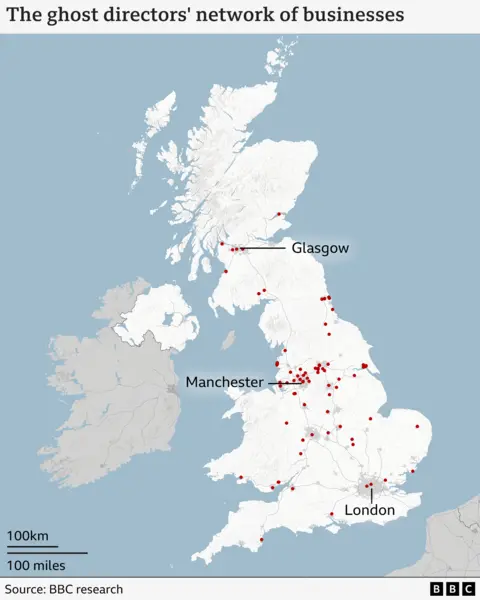
The network spans the UK, with businesses concentrated in economically deprived areas such as Blackpool, Bradford, Huddersfield, and Hull. Most shops sell counterfeit or smuggled cigarettes at approximately £4 per pack, significantly undercutting the UK average price of £16 for 20 cigarettes.
Personal Stories: The Human Cost of Illegal Employment
Interviews with workers in these mini-marts reveal harsh realities. One Blackpool shop employee described working 14-hour days for as little as £4 per hour, having left asylum accommodation in Liverpool. Despite multiple raids by Trading Standards, enforcement was seen as ineffective, with workers often giving false names to avoid detection.
Another Kurdish worker in Salford, registered under Mr. Farzanda’s name, shared his experience of being stuck in legal limbo, unable to claim asylum six months after arrival. He expressed feelings of uncertainty and struggle, highlighting the human toll behind the criminal network.
Government Measures and Enforcement Efforts
The UK government reports a 51% increase in raids targeting illegal working this year and has raised fines to £60,000 per individual found working unlawfully. Home Secretary Shabana Mahmood emphasized that millions of pounds worth of unlicensed goods have been seized, dodgy directors banned, and over 35,000 individuals without legal status removed from the country.
Companies House has enhanced its powers to share information with law enforcement, aiming to disrupt such criminal networks more effectively.
Additional reporting by Phill Edwards and Kirstie Brewer
