
Table of Contents
Table of Contents
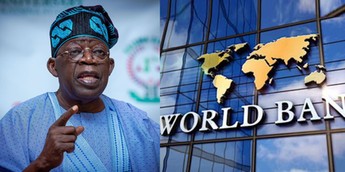
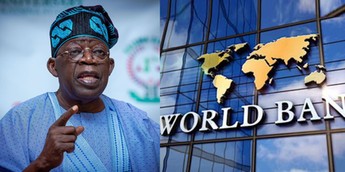
Federal Government Seeks $1 Billion World Bank Loan to Boost Economic Growth
In a bid to accelerate ongoing economic reforms and foster employment opportunities, Nigeria’s Federal Government is actively pursuing an additional $1 billion loan from the World Bank. This financial injection aims to further stabilise the nation’s economy while promoting private sector expansion.
Details of the Proposed Financing Package
The requested funding is part of a new initiative named Nigeria Actions for Investment and Jobs Acceleration (P512892), with the World Bank tentatively scheduled to approve the loan by December 16. The total amount will be divided equally between a $500 million concessional credit from the International Development Association (IDA) and a $500 million loan from the International Bank for Reconstruction and Development (IBRD).
This dual-structured facility is designed to underpin critical macroeconomic reforms, enhance financial inclusion, deepen digital infrastructure and capital markets, and stimulate private investment across strategic sectors of the economy.
Strategic Objectives and Expected Impact
According to the World Bank’s documentation, the Development Policy Financing package “supports Nigeria’s transition from economic stabilisation towards inclusive growth and job creation by expanding credit access, strengthening capital markets and digital services, mitigating inflationary pressures, and encouraging export diversification.”
The current administration under President Bola Tinubu highlights that recent policy measures-such as the removal of fuel subsidies, unification of exchange rates, and cessation of central bank deficit financing-are beginning to yield positive outcomes. These reforms have reportedly enhanced investor confidence and alleviated fiscal constraints.
Challenges Amid Progress
Despite these improvements, significant challenges persist. Inflation remains elevated, and over 130 million Nigerians continue to live below the poverty line, underscoring the gap between macroeconomic indicators and the everyday realities faced by citizens. Economic analysts emphasize that while financial metrics show progress, tangible improvements in living standards are still forthcoming.
Implementation and Broader Economic Strategy
Once sanctioned, the loan will be managed by the Federal Ministry of Finance and integrated into the government’s comprehensive financing strategy. This approach aims to shift Nigeria’s economy from a phase of stabilisation to one of sustained, inclusive growth that benefits a wider segment of the population.
Looking Ahead
With Nigeria’s population projected to surpass 220 million by 2025, according to the United Nations, the urgency to create jobs and diversify the economy has never been greater. This World Bank loan represents a critical step towards addressing these challenges and unlocking Nigeria’s vast economic potential.
