
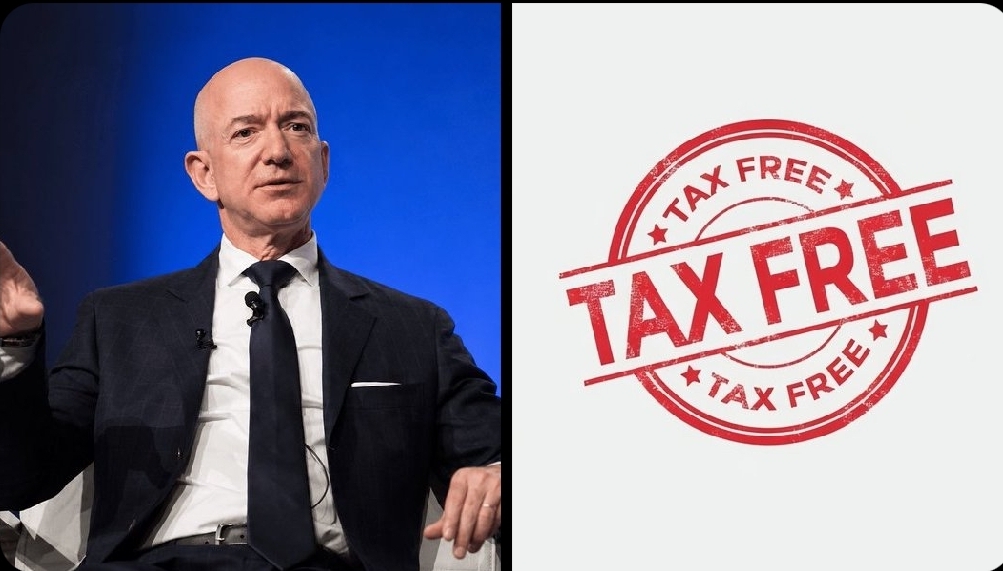
Amazon founder Jeff Bezos has reignited America’s tax debate after stating that the bottom half of U.S. workers should pay zero federal income tax, arguing that working-class Americans are carrying unnecessary financial burdens during a period of rising economic pressure.
Bezos reportedly said lower-income earners contribute only a small fraction of total federal income tax revenue and suggested eliminating that burden entirely could stimulate economic activity, improve household stability, and encourage entrepreneurship. The comments quickly spread across financial and political circles, with supporters praising the proposal as relief for struggling workers while critics questioned whether the billionaire entrepreneur was overlooking broader structural inequality.
The proposal arrives amid growing frustration over inflation, housing costs, healthcare expenses, and wage stagnation affecting millions of Americans. Advocates of tax relief argue that reducing pressure on lower earners could increase consumer spending and strengthen local economies. Critics, however, warn that such policies could create larger budget deficits unless paired with spending cuts or increased taxes elsewhere.
Online reactions have been sharply divided. Some social media users praised Bezos for acknowledging economic hardship faced by ordinary workers, while others accused billionaires of supporting selective tax reforms without addressing wealth concentration or corporate tax loopholes.
The remarks also highlight a broader political trend where economic inequality has become one of the defining issues shaping public debate in the United States. Whether Bezos’ comments influence actual tax policy remains uncertain, but the discussion surrounding who should pay taxes — and how much — is rapidly becoming one of the most politically explosive questions in modern America
